
Yes, a glass-rated ceramic coating is worth it if you want sharper visibility in rain and less time scrubbing bugs and water spots off your windshield. It's especially valuable for commuters, highway drivers, wet-climate owners, and detail enthusiasts who already maintain their paint this way. Expect roughly 1 to 2 years of real performance from a quality glass coating, with DIY kits fitting tight budgets and professional installs suiting anyone who wants that lifespan guaranteed.
TL;DR:
- A glass ceramic coating provides hydrophobic properties that improve rain shedding and reduce the need for frequent cleaning, with a lifespan of about 1 to 2 years.
- Proper application involves thorough decontamination, precise masking, and curing in dry conditions; skipping steps or rushing can significantly decrease durability.
- Windshield wipers and harsh environments like road salt and industrial fallout accelerate coating wear, making regular boosters and pH-neutral washes essential for longevity.
- Controlled testing shows a coated windshield can improve visibility by nearly 34% and response times by over one second in rain and nighttime conditions.
- Professional installation ensures optimal bonding, contamination removal, and proper curing, especially on heavily etched or heavily contaminated glass.
Table of Contents
- What Is a Glass Ceramic Coating and How Does It Work?
- How Do You Apply a Ceramic Coating to Glass?
- How Long Does Glass Coating Last, and What Wears It Down?
- Does Ceramic Coating Actually Improve Visibility and Safety?
- DIY or Professional Installation: How Do You Decide?
- What Professional-Grade Application Looks Like
- Where Glass Coating Made the Real Difference
- Get a Professional Glass Coating Installed the Right Way
- Sources
- FAQ
What Is a Glass Ceramic Coating and How Does It Work?
A ceramic coating for glass is a liquid polymer, usually built on silicon dioxide (SiO2), that bonds to the microscopic pores in automotive glass and cures into a hard, hydrophobic layer. Once cured, water doesn't spread across the surface. It beads up and rolls off, taking road grime with it.
There are two broad chemistries on the market. Rigid SiO2 formulas create a glass-hard shell that resists scratching but can develop micro-cracks over time as the windshield flexes with temperature swings and road vibration. Elastomeric, or flexible, formulas trade a little hardness for the ability to move with the glass, which vendor technical data suggests reduces cracking on windshields specifically, since a windshield endures far more thermal cycling and flex than a side window.
The practical payoff shows up the first time it rains. Water sheets off at highway speed instead of smearing across your field of vision, wiper blades glide with less drag, and the streaky film that builds from washer fluid and bug residue simply doesn't stick the way it used to.
How Do You Apply a Ceramic Coating to Glass?
Application rewards patience more than skill. Rushing the prep is the single biggest reason a $30 DIY kit underperforms a $300 one.
- Decontaminate first. Clay bar the glass to lift embedded contaminants, then use a glass polish to knock down light water-spot etching. Skipping this step traps grime under the coating permanently.
- Strip the surface. Wipe the glass with isopropyl alcohol to remove every trace of polish residue and oil. Any film left behind blocks proper bonding.
- Mask the trim. Tape off rubber seals and plastic cowling so coating doesn't dry as a white haze on nearby surfaces.
- Apply in small zones. Work one quarter of the windshield at a time using an applicator pad, following the product's specific dwell time before buffing with a clean microfiber towel. Most glass-rated products call for a single coat; a second thin pass can add durability but never substitutes for careless first-coat technique.
- Let it cure undisturbed. Keep the vehicle dry and out of rain for the window your product specifies, commonly at least 24 hours, with aggressive cleaners avoided for the first week while cross-linking finishes.
Cold, damp conditions slow that cure considerably, so an unheated garage in January is a poor place to attempt this.
Pro Tip: Never substitute a spray "booster" for the base coating. Boosters top up an existing bond; they have nowhere to grab on bare glass and wear off within days.
How Long Does Glass Coating Last, and What Wears It Down?
Expect a well-applied glass coating to hold up for about 1 to 2 years, with consumer-grade products landing near the shorter end and premium or elastomeric formulas stretching toward the longer one. Windshields wear faster than side or rear glass because wiper blades physically abrade the surface twice a day.
A few habits shorten that lifespan noticeably:
- Running wipers on dry glass, which grinds contaminants into the coating
- Using harsh, ammonia-based washer fluid instead of a coating-safe formula
- Regular exposure to road salt in winter climates
- Heavy commercial-grade contaminants like tar or industrial fallout
A quick health check costs nothing: spray water on the windshield and watch it. Tight beading that rolls off means the coating is still active; water spreading into a flat sheet means it's time to reapply. Trade guides commonly recommend boosting the surface every 3 to 6 months with a ceramic-safe spray to extend beading performance between full reapplications, along with sticking to pH-neutral wash soaps.
Does Ceramic Coating Actually Improve Visibility and Safety?
This isn't just marketing polish. Controlled testing from the University of Michigan Transportation Research Institute found that hydrophobic windshield treatment improved drivers' visual acuity by nearly 34% and cut response times by over one second in simulated rain and nighttime conditions, bringing wet-weather visibility close to daytime levels. One second matters enormously at highway speed.
The trade-off some owners notice is wiper chatter. Research on wiper vibration shows friction-induced noise, from squeal to chattering, depends heavily on blade material, surface roughness, and the coating layer itself. A coated windshield changes the contact surface enough to expose blades that were already worn or low-quality.
The fix is straightforward: replace wiper blades every 6 to 12 months, favor silicone or graphite-infused blades over basic rubber, and have the wiper arm tension inspected if chatter persists after a fresh blade swap.
DIY or Professional Installation: How Do You Decide?
DIY makes sense when your glass is in good condition, you're comfortable with detailing tools, and budget matters more than a guaranteed multi-year result. A confident weekend detailer can get real results from a quality kit.
Hire a professional when the glass shows heavy etching that needs machine polishing, when you're coating a fleet of vehicles, or when you want a documented maintenance plan behind the work. Before booking anyone, ask what prep the price includes, how long the cure window is, and what lifespan they're actually willing to put in writing. Vague answers, no polishing step, or promises of "lifetime" protection on glass are red flags worth walking away from.
What Professional-Grade Application Looks Like
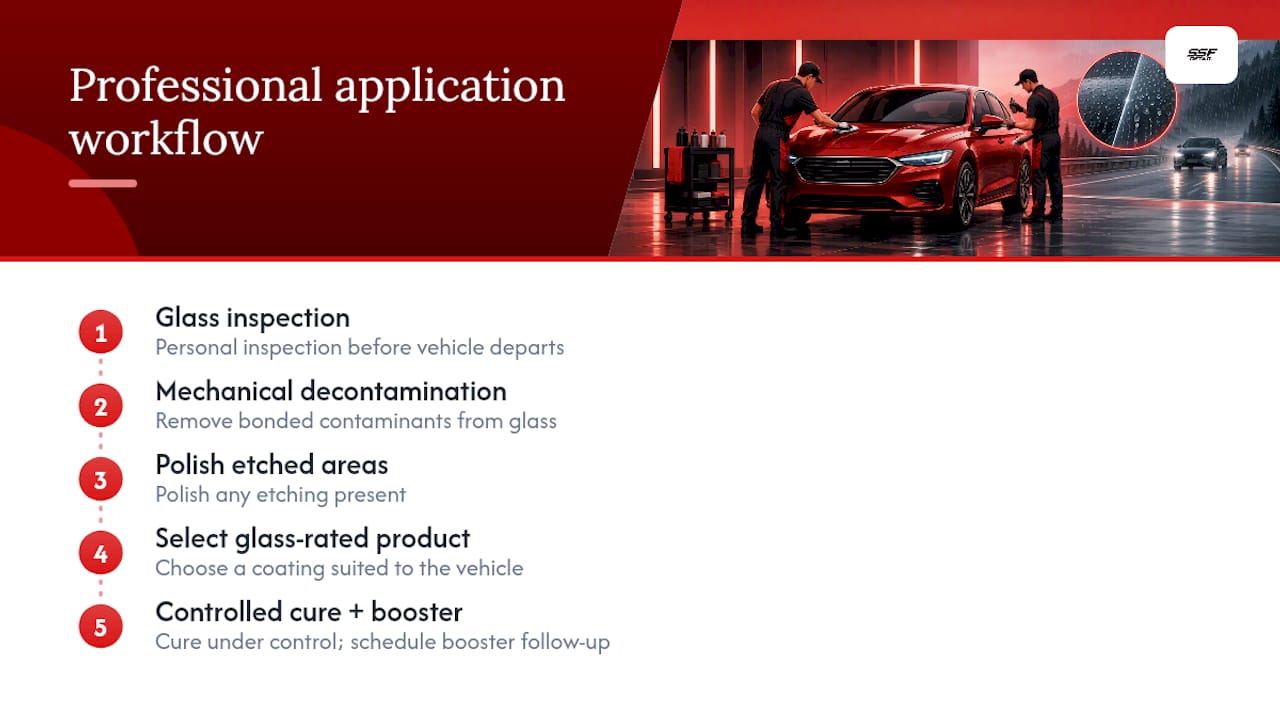
A professional detailer experienced in glass coatings typically applies treatments with personal inspection to ensure quality before the vehicle leaves the shop. A proper professional install includes a full glass inspection, mechanical decontamination, polishing where etching is present, a glass-rated product selected for the vehicle, and a controlled cure with a scheduled booster follow-up rather than a one-and-done spray.
Where Glass Coating Made the Real Difference
The clearest case for glass coating isn't a showroom photo. It's a rainy night commute where a coated windshield sheds water fast enough that wipers barely need to run, and the glass wipes clean in seconds instead of smearing bug residue sideways. Highway commuters and wet-climate owners see that payoff fastest, and it's the segment most worth the investment.
— Martin
Get a Professional Glass Coating Installed the Right Way
Skipping straight to a shop-applied coating means you get the cure time, the product selection, and the documentation that a DIY weekend can't always guarantee. Ssfdetail is the alternative to guesswork glass coating in Boca Raton: every install is personally approved by owner Steven Shames before your vehicle leaves the shop, and it pairs naturally with a broader ceramic coating service that protects your paint the same way.

Whether you're adding glass coating to a full detail package or booking it as a standalone service, the process starts with an inspection to catch etching or contamination before any product touches the glass. Ready to see what your windshield actually needs? Request a free quote and get a real answer instead of a sales pitch.
Sources
- University of Michigan Transportation Research Institute — hydrophobic windshield study
- Frontiers in Mechanical Engineering — study on wiper vibration and coating interactions
- Titan Coatings — Ceramic coating windshield overview
- Cerakote Ceramics — Ceramic Glass Coat Protectant Kit product page
FAQ
Can I Put Ceramic Coating on Glass?
Yes, glass-rated ceramic coatings are formulated specifically for windshields and windows, unlike standard paint coatings. Look for products marketed as glass-specific rather than repurposing a paint coating, since the bonding chemistry and cure requirements differ.
Is Glass Ceramic Coating Worth It?
It's worth it for anyone who drives regularly in rain or wants less time scrubbing water spots off their windshield. The University of Michigan's research showing improved visual acuity and faster reaction times in wet conditions makes the strongest case for it as a safety upgrade, not just a convenience.
What Is the Best Ceramic Coating for Glass?
The best choice depends on whether you want a DIY kit or a professional install with a documented maintenance schedule. Elastomeric formulas tend to outlast rigid SiO2 coatings on windshields specifically because they flex with the glass instead of cracking under thermal stress, and a shop like Ssfdetail selects the formula based on your vehicle's glass condition rather than a one-size-fits-all product.
How Long Does Ceramic Coating on Glass Last?
Most glass ceramic coatings last between 1 and 2 years, depending on wiper use, washer fluid choice, and climate exposure. Regular booster applications every few months extend that window, while frequent dry-wiper use and road salt shorten it.