
Yes, you can put ceramic coating on matte paint, but only if it's a matte-specific formula, not a standard gloss ceramic coating. The single caveat that matters most: skip any aggressive polishing or a coating designed to boost shine, because either one will turn a flat factory finish into a blotchy, semi-gloss mess. If the paint has visible defects or wash marks, professional installation is the safer route.
TL;DR:
- Using a matte-specific ceramic coating is essential, as standard gloss formulas will alter the finish and cause uneven, semi-gloss patches.
- Proper application requires avoiding polishing or fillers that can smooth microtexture and produce unwanted shine, especially on damaged or uneven matte paint.
- Routine maintenance should include pH-neutral, matte-safe products and avoidance of gloss-enhancing waxes or polishes to preserve the coating and finish.
- Professional installation offers better assurance against application errors, uneven leveling, and damage, especially on damaged or defect-prone matte surfaces.
- The lifespan of a matte ceramic coating generally ranges from one to five years, depending on quality, application, and environmental factors; proper prep and maintenance are crucial for longevity.
Table of Contents
- What Makes a Ceramic Coating Matte-Safe?
- Is a Matte Ceramic Coating Actually Worth It?
- How Do You Apply Ceramic Coating on Matte Paint?
- Keeping a Matte Finish Looking Right After Coating
- How Long Does a Matte Ceramic Coating Actually Last?
- What Goes Wrong Most Often With Matte Coatings
- The Installer's View on Matte Protection
- Protect Your Matte Finish the Right Way With Ssfdetail
- Sources
- FAQ
What Makes a Ceramic Coating Matte-Safe?
Standard ceramic coatings are built to deepen gloss. That's the entire point for most buyers, and it's exactly why the same product turns disastrous on a matte hood. Gloss-focused coatings fill microtexture and reflect light evenly across the surface, which is precisely what a flat factory finish is engineered to avoid.
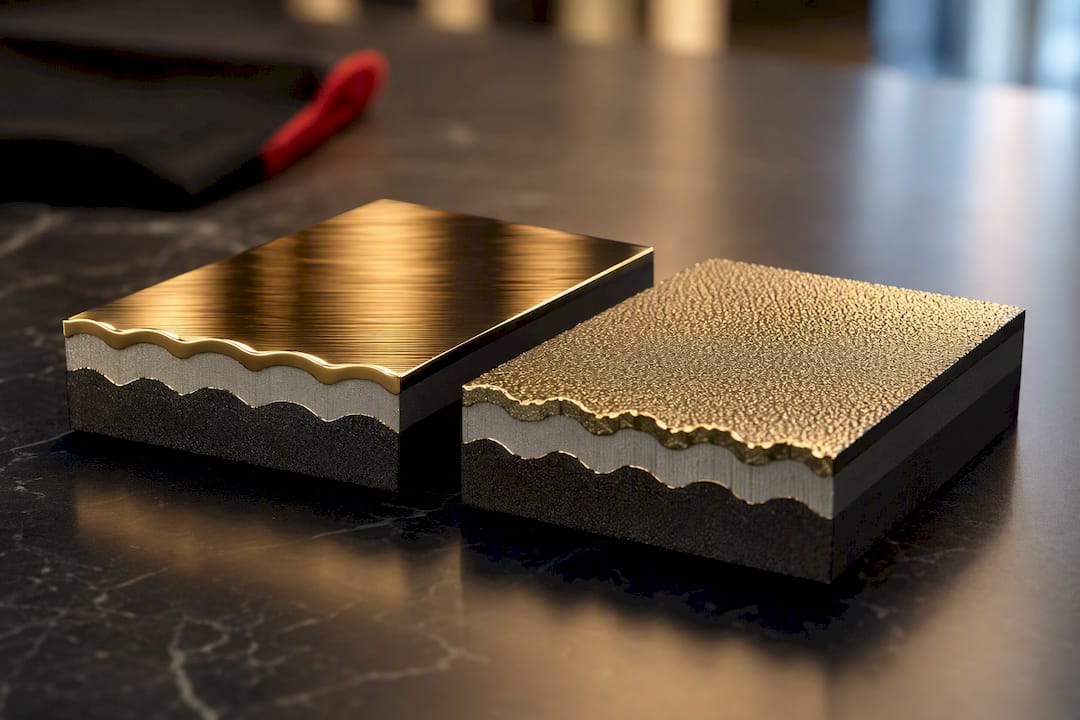
Matte-specific ceramic coatings solve this with a different chemical approach. Manufacturers add matting agents to the formulation, calibrate solids content, and adjust the SiO2 (silica) structure so the cured film sits in the paint's microtexture without smoothing it out. FEYNLAB's Matte Ceramic uses this exact approach, building a matting agent directly into the coating so it protects without altering sheen. The result looks the same under showroom lighting as it did the day it left the factory, just with a protective layer sitting on top.
That protective layer isn't cosmetic filler. Once cured, matte coatings deliver the same core benefits as their glossy counterparts:
- UV resistance that slows oxidation and fading from sun exposure
- Chemical resistance against bird droppings, tree sap, and road grime
- A hydrophobic surface that sheds water and lifts contaminants before they bond
- Scratch resistance against light swirling from improper washing
The line between matte, satin, and frozen finishes gets blurry fast, and that ambiguity trips up a lot of owners shopping for protection. A satin wrap and a factory matte paint job can look nearly identical but respond differently to certain products. Dedicated matte coatings are formulated to work safely across that entire low-gloss spectrum, which is one reason manufacturers market them as a category rather than a single-finish product, according to FEYNLAB's technical explanation of matte finish variance.
A few product lines illustrate how manufacturers approach this differently. Dr. Beasley's Matte Paint Coating Pro kit targets professional installers with a high-solids formula built for multi-year durability. McKee's 37 Matte Finish Ceramic Coating is positioned similarly, with application guidance built around panel-by-panel control. Gyeon Q² Matte EVO claims to protect matte and satin paint, PPF, and vinyl without adding gloss, while also offering self-cleaning behavior. These aren't ranked against each other here. They're simply examples of how differently formulated the matte category is from anything sold for glossy paint.
Is a Matte Ceramic Coating Actually Worth It?
The honest answer depends on how you drive and where you park. Coating a matte finish delivers real, measurable benefits, but it has limits owners need to understand before they spend the money.
What a matte-safe coating genuinely does:
- Reduces how tightly contaminants bond to the paint, so bug splatter, sap, and brake dust wipe away instead of baking on
- Cuts down on staining from bird droppings and industrial fallout
- Adds UV protection that slows the fading and chalkiness matte paint develops over time
- Makes routine washing faster because less scrubbing is needed to lift grime
Matte surfaces show contamination and light wash marks more readily than glossy paint does, which makes that easier release genuinely useful day to day, according to FEYNLAB.
What it will not do:
- Fix existing swirl marks, scratches, or wash-induced sheen spots
- Reverse a clear coat that's already degraded or oxidized
- Hide poor prep work underneath it
A coating locks in the condition the paint is in when it's applied. Damaged matte clear coat stays damaged; a coating just seals it from getting worse.
Pro Tip: If your matte paint already has shiny patches from bad prior washing, get those addressed before coating. A coating applied over uneven texture will preserve that unevenness rather than correct it.
Cost is where DIY and professional installation diverge sharply. A DIY matte kit runs cheaper upfront but demands careful panel-by-panel technique to avoid streaking. Professional installation costs more but usually includes surface assessment, correction where needed, and a workmanship warranty that most DIY kits don't offer.
How Do You Apply Ceramic Coating on Matte Paint?
Application order matters more on matte paint than on gloss paint, because there's zero margin for error before you start seeing permanent sheen changes.
- Assess the surface first. Check for existing contamination, wash marks, and clear-coat condition before touching any product. This step alone determines whether the paint is even coating-ready.
- Decontaminate without polishing. Use matte-safe leveling or chemical decontamination methods rather than compounds or polishes that carry gloss-enhancing fillers. Anything with cutting or filling agents risks smoothing the microtexture that gives matte paint its look.
- Follow the manufacturer's exact application steps. Matte coatings are typically applied panel by panel with specific dwell times. High-solids formulas in particular need enough time to level evenly, since uneven leveling is what creates those glossy patches owners dread. FEYNLAB's technical notes point to this as the main reason improper leveling causes microzones that appear shinier than the surrounding paint.
- Buff off excess within the window the manufacturer specifies. Too long, and residue hazes. Too short, and buildup collects at panel edges.
Manufacturer guidance for higher-solids matte kits often recommends professional installation specifically because dwell time and leveling technique affect the outcome so directly, and warranty coverage is frequently tied to that authorized install, per Dr. Beasley's product documentation.
Pro Tip: If your car has any visible clear-coat defects, or you want a warranty that actually means something, book a professional install. DIY works fine on a clean, defect-free matte finish. It works poorly on anything less.
Choose a professional installer when the vehicle has visible paint defects, you want warranty-backed coverage, or the coating is a high-solids product where dwell time errors are hard to reverse.
Keeping a Matte Finish Looking Right After Coating
Washing matte paint wrong undoes a lot of what the coating was supposed to protect, as detailed in Diamondbrite's matte paint ceramic coating guide. The safest routine borrows directly from correction-focused detailing practice: a two-bucket wash method with a grit guard, pH-neutral shampoo, and soft microfiber towels used with minimal pressure. This setup, along with a proper pre-wash soak of five to ten minutes to loosen grime before contact, is standard guidance for preventing wash-induced marring on any coated finish, according to Diamondbrite's wash guidance.
Certain products are off-limits entirely for matte-coated cars:
- Any spray wax, quick detailer, or sealant containing silicone or gloss-boosting polymers
- Compounds or polishes marketed for "deep gloss" or "mirror finish" results
- Automatic car washes with spinning brushes, which introduce fine scratching matte paint shows more visibly than gloss paint does
For safe top-ups between full maintenance visits, stick to manufacturer-branded matte maintenance sprays formulated for the specific coating installed. McKee's 37 recommends this exact approach for owners who want to refresh hydrophobic performance without touching a full high-solids reapplication. A quick weekly rinse, a full wash every one to two weeks, and a professional inspection every three to six months is a reasonable cadence for most daily-driven matte cars.
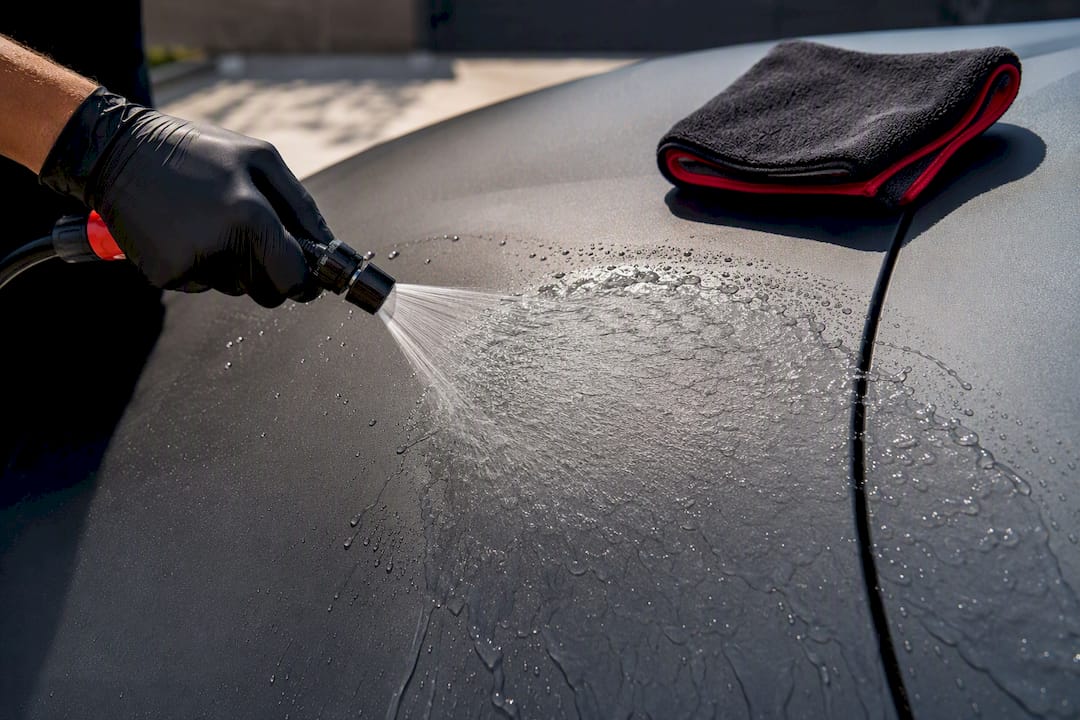
One quirk worth knowing: hydrophobic behavior looks different on matte surfaces than on gloss. Water doesn't bead into tight, rolling droplets the way it does on a glossy coated hood. It tends to sheet and spread flatter across the matte microtexture. That's normal, not a sign the coating has failed.
How Long Does a Matte Ceramic Coating Actually Last?
Manufacturer lifespan claims for matte coatings span a wide range, from roughly a year for lighter spray-on maintenance products up to five or more years for professional-grade matte kits installed by an authorized applicator. Dr. Beasley's Matte Paint Coating Pro kit markets itself in that longer bracket specifically because it's a high-solids formula meant for authorized professional installation.
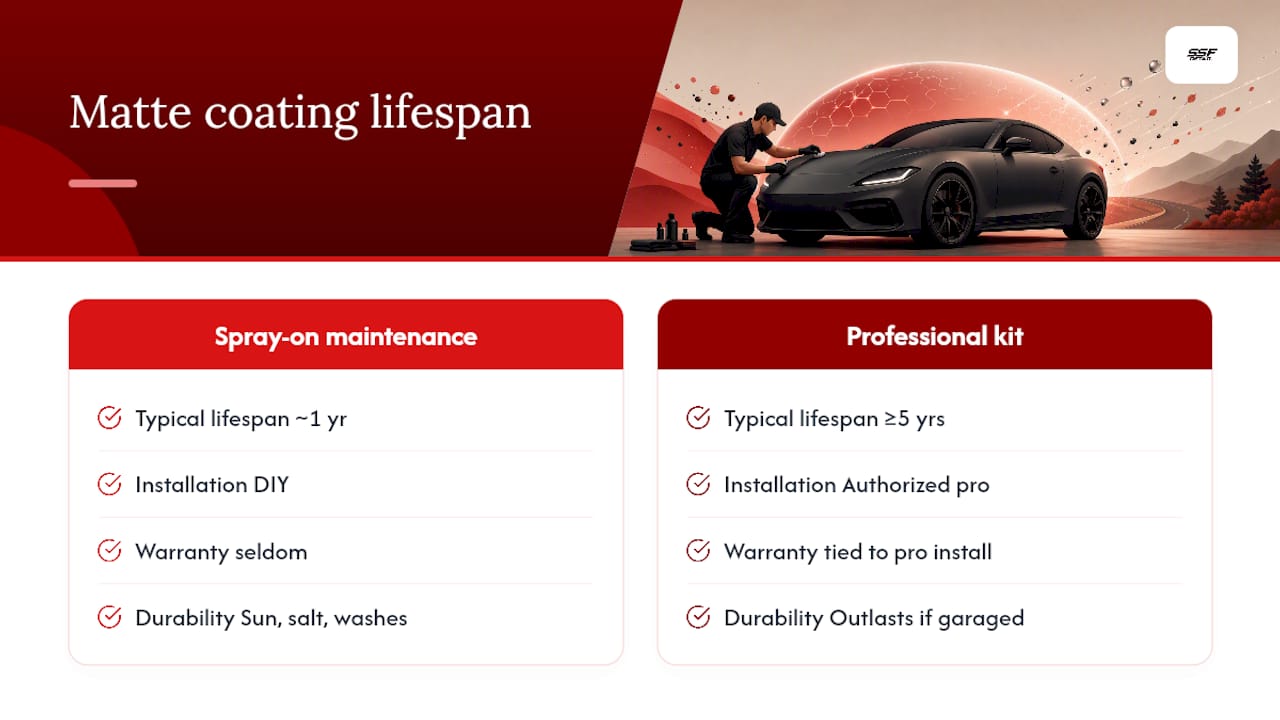
That warranty language is not a formality. Coverage on higher-end matte kits is frequently tied to professional installation and a documented maintenance routine, since incorrect application or the wrong wash products can void protection the manufacturer never actually guaranteed for DIY use.
Real-world life still depends heavily on where the car lives and how it's driven. Constant sun exposure, coastal salt air, harsh commercial washes, and infrequent cleaning all shorten a coating's effective lifespan well below its marketed ceiling. A garage-kept car in a mild climate will consistently outlast a daily driver parked outside near the coast.
What Goes Wrong Most Often With Matte Coatings
Nearly every matte coating failure traces back to one of three mistakes, and all three are preventable before a drop of product touches the paint.
- Using a gloss-focused ceramic coating on matte paint. This is the single most common error, and it's often irreversible without professional correction.
- Polishing or compounding matte paint before coating. Any product designed to fill or level microtexture will add sheen the coating then locks in permanently.
- Uneven leveling during application, usually from rushing dwell time or skipping the panel-by-panel approach manufacturers specify.
Before committing to a full vehicle, always test on a small, low-visibility panel first, like a door jamb edge or the underside of a mirror cap. If gloss appears where it shouldn't, stop immediately. Professional stripping and a recoat with the correct matte-safe product is usually the only real fix.
When vetting an installer, ask directly whether they've worked with matte or satin finishes specifically, what matte-rated product line they use, and whether their install carries a written warranty. A shop that treats matte paint identically to gloss paint, using the same polish steps and the same coating for both, is a red flag worth walking away from.
The Installer's View on Matte Protection
Every matte vehicle evaluated starts with a full inspection before any product is applied. This inspection step decides whether a car needs correction, whether decontamination alone is enough, and which matte-safe formulation fits the finish.
Professional installation is recommended whenever a car has existing clear-coat issues or when the owner prefers warranty-backed results. Experience shows that installs holding up years later are those where prep received as much attention as the coating itself.
— Martin
Protect Your Matte Finish the Right Way With Ssfdetail
Ssfdetail is the alternative to guessing your way through a DIY matte kit online. Every vehicle gets personally inspected and approved by owner Steven Shames before any product goes on, so you're not relying on a bottle's marketing claims to know if the prep was done right.

For matte and satin finishes, our ceramic coating services include Basic Ceramic starting from $1,149, Advanced Graphene starting from $1,599, and Pro Borophene starting from $2,249, each matched to the finish and condition of your paint rather than applied as a one-size fit. A typical appointment starts with a full surface assessment, moves into tailored decontamination and prep specific to matte texture, and ends with an owner-reviewed final check before the car leaves the shop. If your car needs paint-level protection alongside coating, our Comprehensive Detail & Seal and paint protection film services cover that too.
Ready to see what your matte finish actually needs? Request a free quote and get a real inspection instead of a guess.
FAQ
Can You Put Ceramic Coating on Matte Paint?
Yes, as long as you use a coating formulated specifically for matte, satin, or frozen finishes rather than a standard gloss product. Matte-specific coatings like FEYNLAB's Matte Ceramic include matting agents that preserve the flat look while still adding UV and chemical resistance.
Is Ceramic Coating Worth It for a Matte Finish?
For most owners, yes, since it reduces how tightly contaminants bond to the paint and cuts down on staining and fading over time. It won't fix existing scratches or wash marks, so it's most worth it on paint that's already in good condition.
What Is the Best Ceramic Coating for Matte Paint?
There's no single best option, since matte-safe products from FEYNLAB, Dr. Beasley's, McKee's 37, and Gyeon each target slightly different needs, from DIY-friendly application to professional-grade multi-year durability. The better question is which formula matches your finish and whether you're installing it yourself or through a professional like Ssfdetail's ceramic coating service.
What Is the Best Top Coat for Matte Paint?
Any top coat needs to be explicitly labeled matte-safe, since standard waxes, sealants, and gloss-enhancing sprays will add sheen matte paint isn't designed to have. Manufacturer-branded matte maintenance sprays, used as top-ups after a proper wash, are the safest choice for extending a coating's performance between full services.