
A ceramic coating warranty protects the coating's performance, things like gloss retention and resistance to chemical etching, not your paint job and not your bumper after a parking lot mishap. Coverage almost always depends on two conditions: registering the install within a set window (often 30 days) and sticking to a maintenance schedule the manufacturer or installer sets. If you plan to keep the car for years and you'll actually follow the upkeep rules, the warranty adds real value. If you won't, it's mostly a marketing number on a glossy brochure.
TL;DR:
- Warranties only cover coating-related issues such as gloss loss, chemical etching, and peeling, not impact damage or pre-existing paint problems.
- Registration within 30 days and following the maintenance schedule are mandatory for valid warranty coverage, which typically lasts 1 to 10 years depending on the product tier.
- Automatic drive-through car washes, stone chips, and unauthorized repairs void the warranty, while proper documentation and inspections are essential for claim approval.
- Many warranties are non-transferable, so selling the vehicle usually resets any protection unless explicitly stated otherwise by the manufacturer.
- Long-term coating performance depends heavily on environmental factors like salt air, UV exposure, and pollution, requiring owner vigilance beyond the warranty terms.
Table of Contents
- What Warranty Terms Typically Cover
- Common Exclusions and Conditions That Void a Warranty
- Registration, Inspection, and Maintenance Obligations
- How Warranty Claims Are Evaluated and Typical Remedies
- Real-World Limits and What "Lifetime" Warranties Actually Mean
- Is a Warranty-Backed Professional Coating Worth It for You?
- How SSF Detail Handles Warranty Registration, Maintenance, and Support
- Impact of Vehicle Ownership Transfer on Warranty Validity
- Limitations Based on Geographic Region or Environmental Factors
- Three Rules Every Owner Should Follow
- Get a Warranty-Ready Ceramic Coating Install in Boca Raton
- Manufacturer Warranty Pages Worth Checking
- Sources
- FAQ
What Warranty Terms Typically Cover
Ceramic coating warranties are written around chemical and environmental resistance, not mechanical protection. Manufacturers cover the coating's job, keeping the paint's surface bonded, glossy, and resistant to specific chemical attacks, and they draw a hard line around anything caused by an outside object hitting the car.
Most warranty documents protect against a defined set of failures:
- Excessive loss of gloss beyond what's considered normal fading for the coating's age and tier.
- Peeling, chalking, or delamination of the coating layer itself, separate from the paint beneath it.
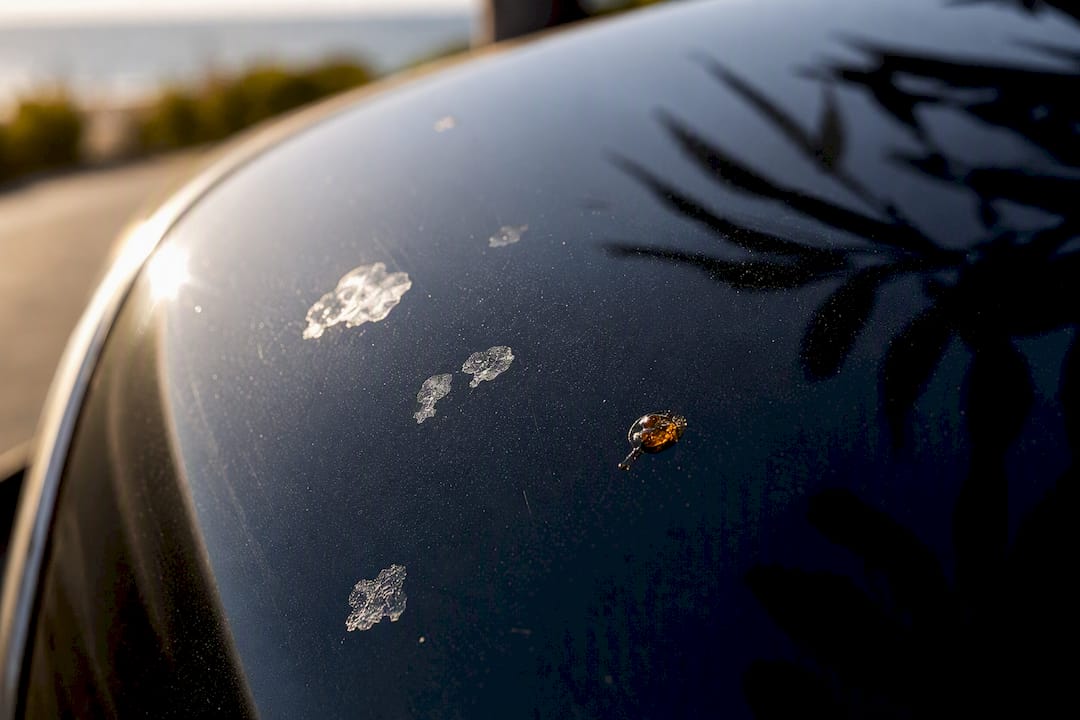
- Chemical etching from bird droppings, tree sap, acid rain, or industrial fallout, provided contaminants were removed within a reasonable window.
- UV-related fading of the coating's clarity, when the vehicle has been maintained per the terms.
There's an important distinction buried in that list: coating failure versus paint or clearcoat defects. If your factory clearcoat was already thinning or oxidized before the coating went on, that's a paint problem, not a coating problem, and warranties routinely exclude it. This is one reason reputable installers photograph and inspect paint condition before application. It protects them, and it protects you from a denied claim months later.
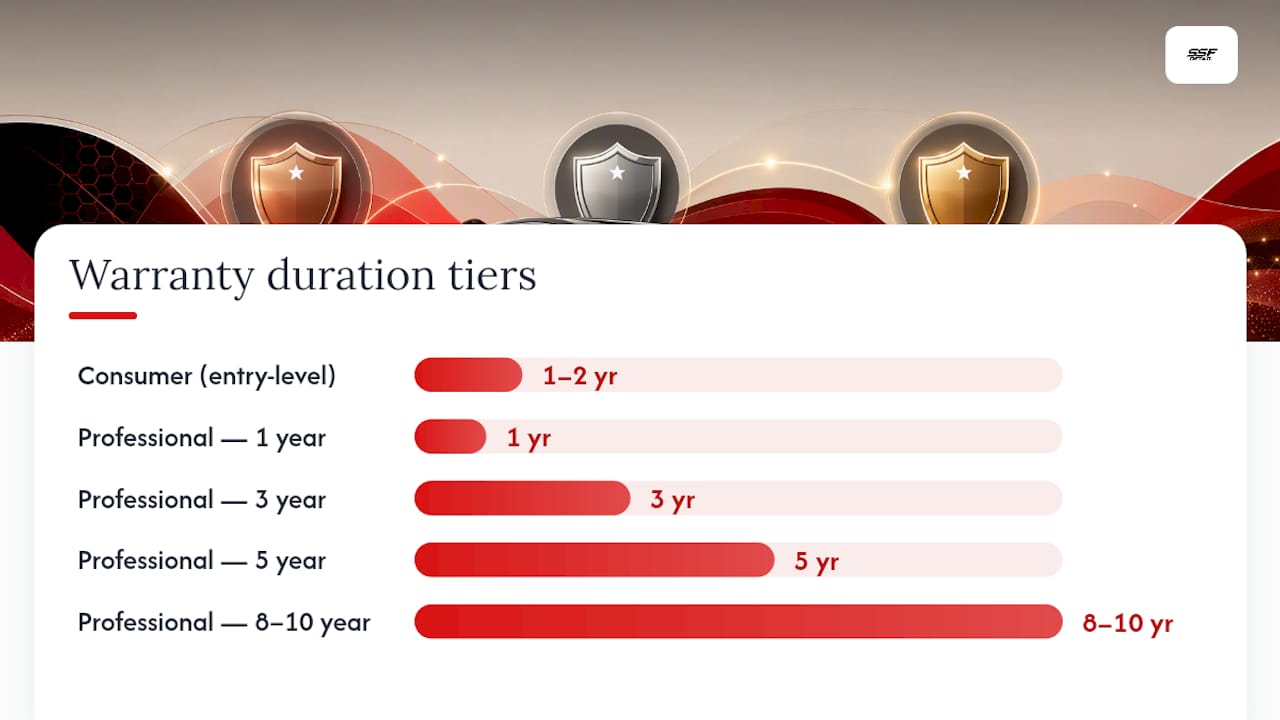
Duration ranges are wide because they track product tier and maintenance commitment rather than a flat industry standard. Entry-level consumer-grade coatings might carry a one or two-year warranty. Professional-grade systems commonly offer tiered protection, often structured around 1, 3, 5, and 8 to 10-year product levels, with the longer tiers requiring more rigorous, verifiable maintenance. Some brands market "lifetime" coverage, but that word is doing a lot of heavy lifting, and the fine print usually spells out exactly what keeps it alive.
Common Exclusions and Conditions That Void a Warranty
The fastest way to lose warranty coverage isn't neglect. It's assuming the warranty protects things it never promised to protect. Reading the exclusions section closely, before you need it, saves a lot of frustration later.
Standard exclusions that show up across nearly every manufacturer's terms include:
- Automatic brush car washes, which use abrasive materials that can scratch or strip a coating's surface layer.
- Stone chips and impact damage, since these are mechanical events, not chemical or gloss failures.
- Pre-existing paint damage that existed before the coating was applied.
- Commercial or fleet use in some consumer-tier warranties, unless a commercial policy was specifically purchased.
- Unauthorized repairs or products, including waxes, sealants, or polishes not approved by the coating manufacturer.
Opti-Coat's published warranty terms are a good real-world example. They explicitly name automatic wash brushes and stone chips as exclusions, and they specify the warranty is non-transferable if the car changes hands. That combination, narrow coverage plus ownership restrictions, is close to industry standard, not an outlier.
Washing habits matter more than most owners expect. Abrasive towels, drive-through washes with spinning brushes, and off-label polishing compounds can degrade a coating's hydrophobic surface even when the underlying bond is fine. Some manufacturers name specific banned products in their terms, so it's worth checking that list before you grab whatever's on the shelf at the auto parts store.
When language gets ambiguous, look for how the document defines "normal wear" versus "failure." Normal wear (a slow, even dulling of gloss over years) is typically not covered. Failure (patchy loss of hydrophobic behavior, visible peeling, or etching that shouldn't have happened under proper care) usually is.
Pro Tip: Keep a folder, digital or physical, with your warranty PDF, your registration confirmation email, and dated photos from the day of installation. If a claim ever comes up, that folder is the difference between a five-minute approval and a drawn-out dispute.
Registration, Inspection, and Maintenance Obligations
A warranty you never registered isn't a warranty. It's a piece of paper. Manufacturers build in an administrative step specifically to confirm the coating was professionally applied and to start the maintenance clock.
Here's the typical sequence owners need to follow:
- Save your documentation. Keep the original invoice, the installer's certification, and any curing instructions provided at pickup. Some manufacturer documents note a curing period of two to three weeks before the coating reaches full hardness, and treating the car too aggressively during that window can affect your standing.
- Attend scheduled inspections. Many programs require annual or periodic inspections performed by an authorized applicator, not just any detail shop, to confirm the coating is holding up and being maintained correctly.
- Follow the routine care checklist. This usually means pH-neutral shampoo, handwashing or touchless washes instead of automatic brushes, prompt removal of bird droppings and tree sap, and occasional use of a manufacturer-approved topper or booster spray between full maintenance visits.
Skipping the inspection step is the most common way owners accidentally forfeit coverage. It's not because they did something wrong to the paint. It's because they can't prove they didn't.
How Warranty Claims Are Evaluated and Typical Remedies
Filing a claim isn't a phone call and a same-day fix. It's closer to an insurance process, with documentation driving the outcome.
Before you contact anyone, collect:
- Dated photos of the affected area, ideally alongside a reference photo from a similar angle taken shortly after installation.
- Maintenance receipts showing you followed the required wash and care routine.
- Inspection records from your authorized applicator, if your warranty tier requires them.
- Proof of registration, since an unregistered coating typically has no claim path at all.
Once you submit a claim, the installer or manufacturer's authorized agent inspects the vehicle to determine cause. This is the step where coating failure gets separated from external damage. Etching from bird droppings that sat too long is treated differently than a rock chip from the highway, even though both might look like a "defect" to an untrained eye. Documentation is what most installer guidance points to as the deciding factor in whether a claim moves forward smoothly.
Approved claims generally result in one of three outcomes: repair or recoat of just the affected panel, a full reapplication if the failure is widespread, or a capped cash settlement in cases where reapplication isn't practical. Manufacturer terms often specify a maximum payout rather than an open-ended replacement guarantee, so "warranty" doesn't always mean "free redo," especially on an older vehicle with significant coating age already behind it.
Real-World Limits and What "Lifetime" Warranties Actually Mean
"Lifetime" sounds absolute. In warranty terms, it almost never is. The word typically means "for as long as you follow every maintenance requirement to the letter," which is a very different promise than it sounds like on a sales flyer.
Industry commentary consistently flags this gap between marketing language and practical reality: environmental exposure and maintenance habits tend to determine how a coating actually performs far more than the number printed on the warranty certificate. A car garaged every night in a mild climate will outperform its warranty term. A car parked under trees in a coastal, sun-heavy environment, dealing with sap, salt air, and constant UV, may struggle to meet even a shorter warranty's conditions despite the owner's best intentions.
A strict, documented, annual inspection requirement is a stronger signal of a meaningful warranty than a vague "lifetime" label with no verifiable upkeep attached to it. If a program never asks to see the car again after installation, ask yourself what exactly that warranty is actually promising.
Salt exposure near coastal areas, automatic wash brushes, and prolonged parking under trees are the three most common accelerants of premature coating breakdown. None of those factors are usually covered as "failures," because they're considered avoidable through normal care, which is precisely the maintenance gap most claims get denied over.
The real takeaway: a warranty covers the failures it defines as failures, when you've met its conditions. It does not promise uninterrupted showroom gloss with zero effort on your part for a decade.
Is a Warranty-Backed Professional Coating Worth It for You?
The math here isn't complicated, but it does require an honest answer about your own habits. Warranty value scales with how long you'll own the car, how much the car is worth, how harsh your climate is, and whether you'll genuinely follow a maintenance routine instead of just meaning to.
Ask yourself these questions before paying a premium for warranty-backed installation:
- Will I own this car long enough to make an annual inspection requirement worth scheduling?
- Is my climate (coastal, high-UV, heavy tree pollen) going to stress the coating faster than average?
- Am I willing to give up automatic brush car washes for the life of the coating?
- Does the warranty's remedy cap make sense relative to what I paid for the install?
Watch for warning signs in the language itself. Vague exclusions ("normal wear," undefined, with no examples), maintenance requirements that read as unreasonably strict or expensive, and low remedy caps relative to the installation price are all red flags worth raising with the installer before you sign anything.
Before booking, ask the installer directly: What's the registration process, and who handles it, me or you? Who performs the required inspections, and how often? What documentation will I receive at pickup? And is this warranty transferable if I sell the car? (The honest answer to that last one is usually no.)
Pro Tip: If an installer can't clearly answer all four of those questions on the spot, that's a bigger red flag than anything printed in the warranty document itself.
How SSF Detail Handles Warranty Registration, Maintenance, and Support
Warranty language only matters if the installer behind it follows through. At SSF Detail, every ceramic coating install is registered on the customer's behalf, with the invoice, VIN, and owner information filed the same day the work is completed, keeping you inside that critical 30-day window without having to chase paperwork yourself.
Each vehicle is personally reviewed by the shop owner before it leaves, which matters more for warranty purposes than most owners realize. A proper paint correction before coating reduces the chance that a pre-existing paint issue later gets mistaken for a coating failure, and controlled, documented application gives you a clean baseline if you ever need to file a claim.
Scheduled inspections and maintenance plan reminders are built into the process to help ensure warranty enforceability when issues arise.
Impact of Vehicle Ownership Transfer on Warranty Validity
Selling the car doesn't transfer the warranty with it, in nearly every case. Ceramic coating warranties are typically written as non-transferable, tied specifically to the original registered owner and the vehicle's VIN at the time of installation.
This matters for two groups of people. If you're planning to sell within a few years, the warranty's long-term value drops considerably, since the new owner starts from zero protection even though the coating is still physically on the car. If you're buying a used vehicle marketed as having a "warrantied ceramic coating," that claim is almost certainly meaningless to you unless the seller can show a program that explicitly allows transfer, which is uncommon.
Some professional installers offer a transfer process for a fee or under specific conditions, but that's the exception, not the rule, and Opti-Coat's published terms reflect the standard non-transferable structure found across most manufacturer programs. If ownership transfer matters to your decision, ask about it explicitly before installation rather than assuming coverage follows the car.
The practical fix, if resale value matters to you, is treating the coating itself (and the documented maintenance history) as the selling point, not the warranty number. A car with receipts showing consistent professional maintenance will show better and hold value better than one leaning on a warranty the buyer can't use anyway.
Limitations Based on Geographic Region or Environmental Factors
Warranty terms read the same nationwide, but real-world performance doesn't. Climate shapes how hard a coating has to work, and that shows up in claim outcomes even when the paperwork looks identical.
Coastal environments push salt air and humidity onto the paint constantly, accelerating the kind of chemical exposure that can outpace a coating's resistance if maintenance lapses even briefly. High-UV regions add another layer of stress, breaking down the coating's clarity faster than in milder climates, even under otherwise ideal care. Areas with heavy tree cover bring sap and pollen into daily contact with the paint, both of which can etch a surface if left too long between washes.
None of this changes what the written warranty covers. It changes how hard you need to work to stay inside those terms. A car in a humid coastal region may need contaminant removal and inspections on a tighter cadence than the warranty's stated minimum just to keep the coating performing the way it's supposed to. Owners in milder, drier climates often find the standard maintenance schedule more than sufficient.
This is also where an authorized applicator earns their keep. A local installer familiar with your region's specific stressors, salt, sap, sun intensity, can flag maintenance adjustments a national warranty document simply won't mention, because it's written for every climate at once, not yours specifically.
Three Rules Every Owner Should Follow
Register within the stated window, no exceptions. Follow the inspection and maintenance schedule exactly as written, not as you remember it. Read the exclusions before you need them, not after a claim gets denied.
If you're keeping the car for years and you'll genuinely commit to the upkeep, a warranty-backed professional install is worth the premium over DIY. If you're not willing to follow through on maintenance, save the money. The warranty won't help you anyway.
— Martin
Get a Warranty-Ready Ceramic Coating Install in Boca Raton
A DIY spray coating kit costs less upfront, but it comes with no registration process, no inspection support, and no one to call when a claim question comes up. SSF Detail handles the paperwork side of protection the same way it handles the paint: personally, and on time.
Installations typically include documented paint correction, warranty registration, and a maintenance plan tailored to the local climate rather than a generic national schedule. The owner signs off on each vehicle before it leaves, and the operation has serviced a large number of cars across Boca Raton and the surrounding area with a hands-on standard. If you're ready to see what a properly registered, properly maintained coating looks like on your own car, request a free quote on ceramic coating and get a straight answer on timeline, coverage, and cost before you commit to anything.
Manufacturer Warranty Pages Worth Checking
Before signing, pull up the manufacturer's own warranty page, not just the installer's summary. Compare terms against Nano-Pro's warranty page and Ceramic Pro's aftercare and warranty document for two real examples of how registration deadlines and inspection language get written. Save a copy of your own warranty PDF and registration confirmation the day you get them.
Sources
- NANO-CERAMIC e-warranty — product tiers and maintenance conditions
- Opti-Coat warranty terms and conditions
- Ceramic Pro — After care & warranty (PDF)
- Is Ceramic Coating Worth It? — AutoBodyLab
FAQ
What Does a Ceramic Coating Warranty Actually Cover?
It covers coating performance failures like excessive gloss loss, chemical etching, and peeling when you've met registration and maintenance requirements. It does not cover stone chips, impact damage, or pre-existing paint problems.
How Long Should a Ceramic Coating Last?
Professional-grade coatings typically last three to five years or more with proper prep and maintenance, while consumer DIY products often last only months to two years. Warranty length tracks the product tier, ranging from one year up to advertised "lifetime" coverage with strict upkeep conditions.
What Destroys Ceramic Coating Fastest?
Automatic brush car washes, prolonged exposure to bird droppings or tree sap, and abrasive polishing compounds are the most common causes of premature coating breakdown. Coastal salt air and constant high UV exposure accelerate the damage further.
Is a Ceramic Coating Warranty Transferable to a New Owner?
No, most ceramic coating warranties are non-transferable and stay tied to the original registered owner and VIN. If you're buying a used car with a coating already applied, assume there's no active warranty protection unless the seller can prove otherwise.
How Do I Verify a Ceramic Coating Warranty Is Legitimate?
Ask for the manufacturer's actual warranty document, not just a verbal promise, and confirm the installer is listed as an authorized applicator for that product. A legitimate warranty always includes a clear registration process, a written exclusions list, and a documented inspection schedule, something a service like SSF Detail builds into every installation from day one.