
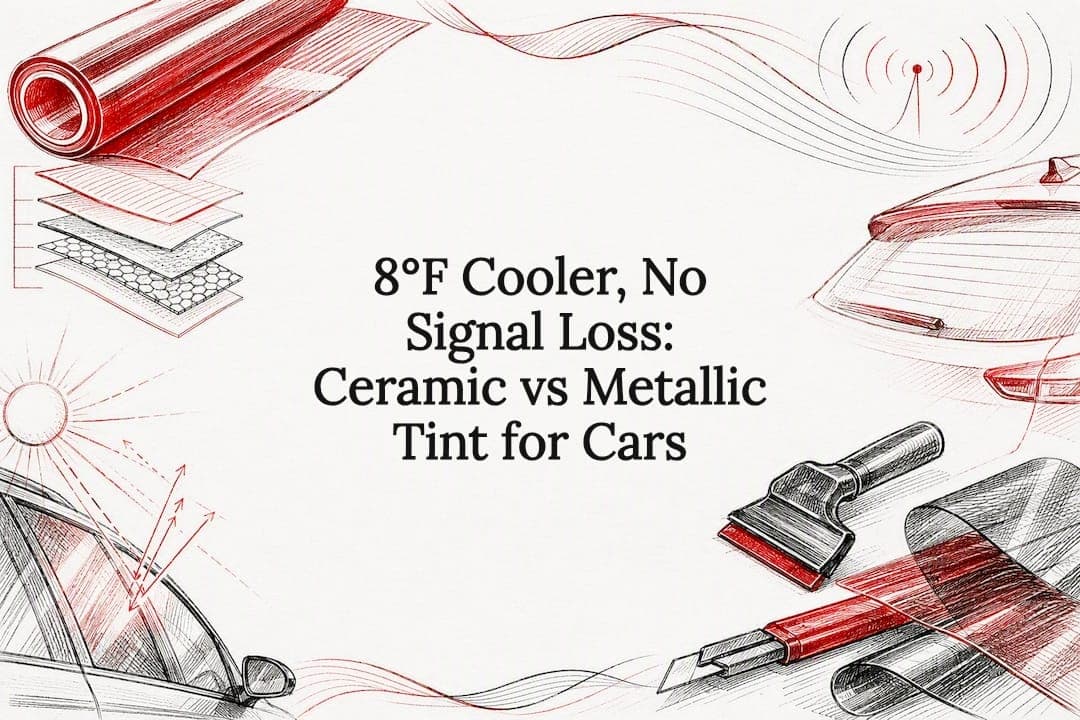
Ceramic wins for most drivers, and it's not close. It blocks more heat, protects electronics, resists fading, and preserves visibility better than metallic film, though you'll pay more upfront. Metallic still earns its place when you want a reflective, privacy-heavy look on a tighter budget and don't rely on GPS, toll transponders, or cell signal inside the cabin.
TL;DR:
- Ceramic tint blocks up to 98% of infrared heat and offers over 99% UV protection, significantly reducing cabin temperature and fading of interior surfaces.
- Metallic tint provides moderate IR rejection but can interfere with GPS signals, cell phones, and toll transponders, especially on front windows.
- Ceramic films typically cost between $300 and $900 for full-installation and come with warranties of 10 years or more, making them more cost-effective over the vehicle's lifespan.
- Metallic films are more affordable, costing around $200 to $400, but usually have shorter lifespans and higher chances of signal interference.
- For owners seeking long-term value, hot-climate driving, or sensitive electronics, ceramic is the superior choice despite its higher initial expense.
Table of Contents
- Ceramic Tint vs Metallic: What Ceramic Film Actually Is
- Ceramic Tint vs Metallic: How Metalized Film Performs
- How Ceramic and Metallic Compare Head to Head
- How to Choose Between Ceramic and Metallic
- What SSF Detail Checks Before Every Tint Install
- The Real Trade-Off Nobody Explains Clearly
- Get Ceramic Tint Installed the Right Way
- Sources
- FAQ
Ceramic Tint vs Metallic: What Ceramic Film Actually Is
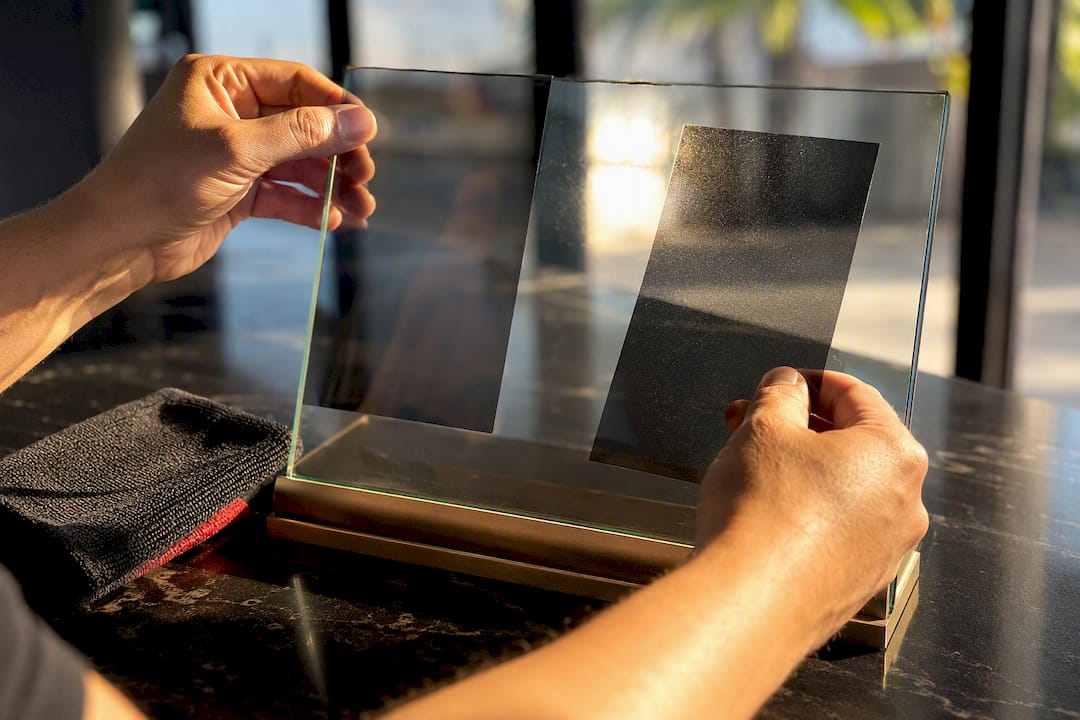
Ceramic window tint is built from nano-ceramic particles embedded in a multi-layer polyester film. Those particles are non-metallic and non-conductive, which is the single biggest reason ceramic behaves so differently from its metalized cousin once it's on your glass.
The particles are engineered specifically to scatter and absorb infrared radiation, the part of sunlight you actually feel as heat, rather than just darkening what you see. That distinction matters because visible light transmission (VLT), the percentage of light that passes through, is not the same measurement as heat rejection. A 50% VLT ceramic film can reject more solar energy than a much darker dyed film, since darkness and heat rejection track different parts of the light spectrum.
In practical terms, ceramic film delivers:
- IR rejection that can block 60 to 98 percent of infrared radiation depending on the product grade you choose.
- UV protection north of 99%, which slows fading on leather, dashboards, and upholstery over years of sun exposure.
- Color stability that resists the purpling and fading dyed films are known for, so your tint looks the same at year eight as it did at month one.
- Clear night visibility, since ceramic doesn't add the haze or glare some older films introduce.
A full-car ceramic install typically runs $300 to $900, and premium product lines commonly carry warranties of 10 years or longer, sometimes for the life of the vehicle.
Ceramic film blocks up to 98% of infrared heat while staying completely non-metallic, which is why it's become the standard choice for newer vehicles loaded with sensors and wireless features.
Pro Tip: Don't shop by VLT percentage alone. Ask any installer for the film's TSER (Total Solar Energy Rejection) and IR rejection numbers. Two films at the same "35% tint" can perform completely differently once the sun hits.
Ceramic Tint vs Metallic: How Metalized Film Performs
Metallic tint works on a different principle entirely. Microscopic layers of metal, often aluminum, are embedded in the film to reflect solar energy away from the glass rather than absorb it. That reflective mechanism gives metallic film solid heat rejection and above-average durability against scratching.
The catch is what that metal layer does to everything else. It's a conductor, and conductors interfere with radio waves. Drivers with metallic tint often notice weaker GPS lock, degraded cell signal, static on satellite radio, and reduced range on toll transponders and key fobs. Metalized films are widely reported creating these interference issues precisely because ceramic film contains no metal to cause them.
There's also a visual trade-off. Metallic tint tends to produce a mirror-like or overly reflective exterior appearance; some owners like it for privacy, while others find it gives the car a cheaper, aftermarket look. It can also introduce a faint dashboard reflection at night that ceramic doesn't.
Where metallic still holds up:
- Moderate heat rejection at a lower price point, generally $200 to $400 for a full install.
- Decent scratch resistance from the metal layer itself.
- A distinct reflective finish some buyers actively want for privacy.
Warranty coverage on metallic film tends to run shorter than ceramic's, and lifespan often falls short of a decade before signs of wear, like bubbling or a shift toward a bluish tint, become noticeable.
How Ceramic and Metallic Compare Head to Head
Numbers on a spec sheet don't mean much until you feel them in the driver's seat. Here's what the difference actually looks like in daily use.
| Factor | Ceramic | Metallic |
|---|---|---|
| Heat rejection / IR performance | Higher IR-targeting efficiency; up to 98% IR block | Moderate; reflects heat but less IR-specific |
| UV protection | 99%+ | Generally high, but often less consistent |
| Signal interference | None (non-metallic) | Common (GPS, cell, toll, radio) |
| Clarity & night visibility | Excellent, minimal glare | Can add glare or dashboard reflection |
| Durability / fade resistance / warranty | 10+ years, often lifetime | Shorter warranty, moderate fade resistance |
| Typical upfront cost | $300 to $900 full install | $200 to $400 full install |
Independent testing found ceramic film reduced cabin temperature by about 27°F, compared to roughly 19°F for metallic film at the same VLT level. That eight degree gap isn't trivial when your air conditioner is working overtime in a Florida summer. Less heat load means your AC compressor cycles less, which adds up over years of ownership.
Signal interference is where the difference stops being theoretical and starts being annoying. A metallic-tinted windshield or front windows can cause your phone to drop from four bars to one inside a parking garage, cause SunPass or E-ZPass readers to miss a scan, or make Bluetooth pairing stutter. Ceramic simply doesn't create that problem because there's no metal layer to block the frequency.
Night driving tells a similar story. Ceramic film's clarity holds up in low light, while metallic's reflective coating can throw a faint secondary reflection across your windshield from interior lights or your own dashboard glow.
Durability is where the lifecycle math gets interesting. Metallic film often needs replacing sooner, sometimes within five to eight years, while ceramic frequently carries warranties covering a decade or more. Run that over a quinceyear ownership window and ceramic's higher sticker price often works out to a lower annualized cost, since you're not paying for a second or third install.
If you want a middle ground, carbon and hybrid films split the difference: no metal, so no signal interference, but generally less IR rejection than true ceramic and a lower price tag. They're a reasonable step up from dyed film if ceramic is outside your budget, though they won't match ceramic's numbers.
How to Choose Between Ceramic and Metallic
Run through this before you call an installer:
- Check your climate. If you're dealing with real summer heat for months at a time, ceramic's IR rejection pays for itself in comfort and reduced AC strain.
- Think about how long you'll keep the vehicle. Selling in two years? Metallic's lower upfront cost might make more sense. Keeping it five-plus years? Ceramic's lifespan and warranty tilt the math in its favor.
- Count your electronics. Toll transponders, GPS navigation, and phone mounts all sit behind glass that metallic film can interfere with.
- Decide how reflective you want the exterior to look. Metallic's mirror finish is a style choice as much as a performance one.
- Set a real budget, and compare installed price, not just film cost, since labor and film-to-glass compatibility checks vary by shop.
When you're getting quotes, ask every installer for their film's TSER and IR rejection figures in writing, not a vague "blocks most of the heat" answer. Ask to see a film-to-glass compatibility chart, since some high-absorbing films can stress certain glass types if applied incorrectly. Confirm the warranty in writing and ask what a post-install check includes.
Red flags worth walking away from: no lab numbers offered, a shop that can't explain film-to-glass compatibility, or a "lifetime warranty" price that seems too low to cover real materials.
Pro Tip: If you're torn between ceramic and a hybrid carbon film for budget reasons, ask the installer to show you both films held up against direct sunlight. The heat difference on your hand is more convincing than any brochure number.
What SSF Detail Checks Before Every Tint Install
Every ceramic tint job at SSF Detail starts with a film-to-glass compatibility check, since high-absorbing films can create thermal stress on certain glass types if the wrong product is matched to the wrong window. Curing time, edge sealing, and precision cutting all get owner-level attention before a car leaves the shop, part of why SSF Detail has serviced more than 1,350 vehicles with tailored maintenance plans built around each owner's driving habits.
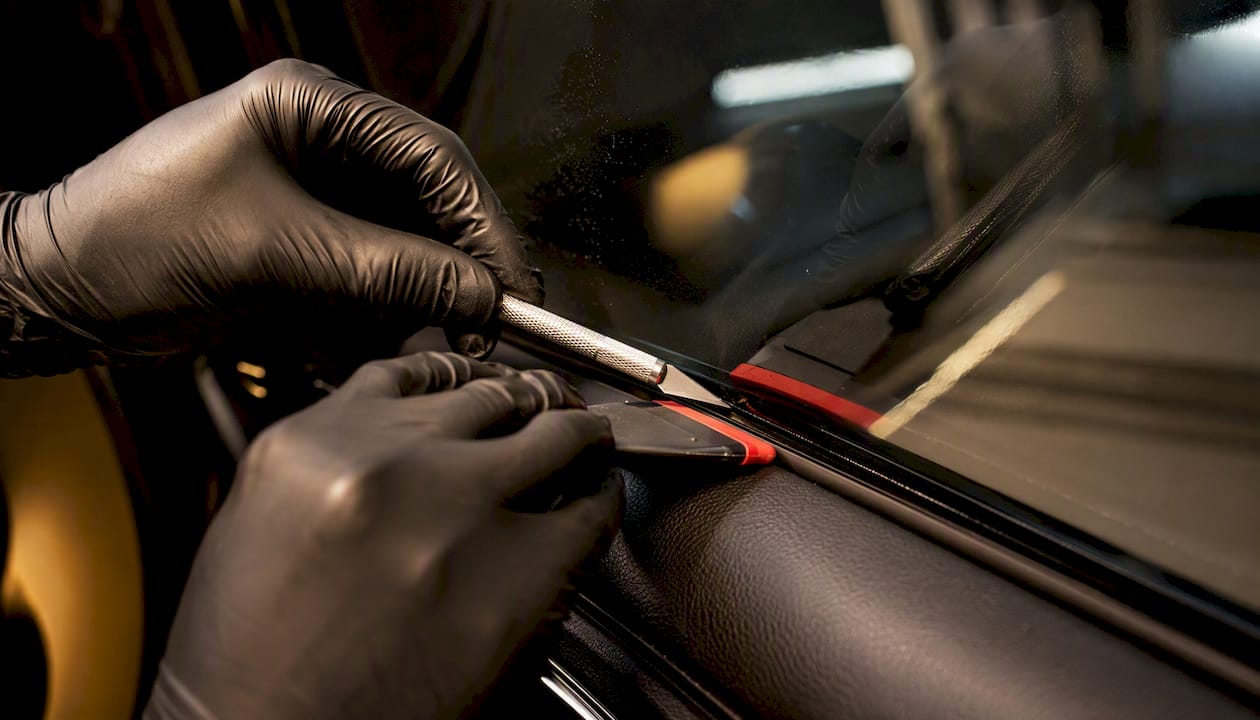
Aftercare is simple: skip ammonia-based cleaners, which break down film adhesive over time, and book a recheck if you notice edge lifting or bubbling. A professional warranty should cover material defects and include at least one follow-up inspection.
The Real Trade-Off Nobody Explains Clearly
Long-term owners, hot-climate drivers, and anyone leaning on GPS or toll transponders should default to ceramic almost every time. The upfront premium disappears once you count years of undamaged upholstery and zero signal headaches.
Metallic still makes sense for short-term ownership or a deliberately reflective look on a tight budget. One caution either way: skip the DIY kit. A professional safety check on film-to-glass compatibility is worth more than the money you'd save.
— Martin
Get Ceramic Tint Installed the Right Way
If everything above points you toward ceramic, the next question is who installs it. SSF Detail's Boca Raton tint service runs every job through a film-to-glass compatibility check first, then handles precision cutting, edge sealing, and curing under owner Steven Shames' personal review, the same standard behind more than 1,350 vehicles serviced.
A booking includes an inspection of your current glass and any existing film, a compatibility check against the ceramic product you're considering, professional installation, and warranty documentation you can actually reference later if a question comes up. For owners weighing ceramic against metallic specifically because of long-term value, that warranty backing is the difference between a one-time expense and a decade-long investment. Request a free quote through SSF Detail's car detailing and tinting page and get a straight answer on what your vehicle's glass actually needs.
Sources
- Ceramic vs. Dyed vs. Metallic Tint: Real Performance Data | TrueLine Automotive
- Ceramic Window Tint: Complete Guide to Types, Cost, and Performance (TintGrade)
- Ceramic Window Tint: Complete Guide to Types, Cost, and Performance (Window Film Depot)
- Architectural Ceramic Window Film | Madico Sunscape
FAQ
What Are the Downsides of Ceramic Tint?
The main downside is upfront cost, typically $300 to $900 for a full install versus $200 to $400 for metallic. Ceramic also won't give you the mirror-like reflective look some drivers want for privacy.
Can I See Clearly at Night With Ceramic Tint?
Yes. Ceramic film is engineered for clarity and generally produces less glare and dashboard reflection at night than metallic film, which can throw a faint secondary reflection from interior lights.
Is Ceramic Tint Really Worth the Extra Money?
For most owners, yes. Ceramic's longer warranty coverage, often 10 years or more, and better heat rejection typically lower its cost per year of ownership compared to replacing metallic film sooner.
Is There Anything Better Than Ceramic Tint?
Not for most drivers weighing performance against cost. Carbon and hybrid films offer a non-metallic middle ground at a lower price, but they generally don't match ceramic's IR rejection or UV protection numbers.
Does Metallic Tint Really Interfere With Electronics?
Yes. The metal layer in metallic film is conductive and can weaken GPS signal, cell reception, and toll transponder range, an issue ceramic avoids entirely since it contains no metal.