
Optically clear nano-ceramic film is the recommended windshield tint whenever your state's laws allow it. It rejects heat and UV without darkening the glass, so it stays street legal in places that ban tinted front windows. Before you buy, confirm your local VLT rules and book a professional installer who can show you real spec sheets and a written warranty.
TL;DR:
- Most states restrict windshield ceramic tint to high VLT percentages, often around 80% or more, and installation must include documented VLT testing to ensure compliance.
- Properly specified ceramic films block over 99% of UV rays and reject 70 to 90% of infrared heat, significantly reducing cabin temperature and protecting interior materials.
- Poor installation can cause haze, distortion, or ghosting effects that impair night visibility, making professional workmanship essential for optical clarity.
- Professional ceramic tint installation costs vary based on vehicle size and complexity but offers guarantees against bubbling, delamination, and optical defects, unlike DIY kits.
- For outside drivers or those with light-colored interiors, ceramic windshield film delivers measurable sun protection and glare reduction, especially on long daily commutes or fleet vehicles.
Table of Contents
- What Is Ceramic Windshield Tint and How Does It Work?
- What Are the Real Benefits of Ceramic Tint?
- Is Ceramic Tint Legal on a Windshield?
- Will Ceramic Tint Affect Night Driving or Visibility?
- How Much Does Professional Ceramic Tint Installation Cost?
- How Do You Maintain and Care for Ceramic Window Film?
- How Do You Choose a Windshield Tint Installer?
- When Does Ceramic Windshield Film Actually Make Sense?
- Get Professional Ceramic Windshield Tint Installed the Right Way
- Sources
- FAQ
What Is Ceramic Windshield Tint and How Does It Work?
Ceramic windshield tint uses nano-ceramic particles instead of dye or metal to filter sunlight. These particles are non-metallic and non-conductive, which is exactly why the film can sit directly over your GPS antenna or toll transponder without scrambling the signal, according to LLumar's technical documentation. The technology is spectrally selective: it targets infrared and ultraviolet wavelengths while letting visible light pass through almost untouched.
That selectivity is the whole point of a clear ceramic windshield film. Two numbers matter here, and they're not interchangeable:
- VLT (visible light transmission) measures how much light passes through the glass, which determines legality and how dark the film looks.
- IR rejection measures how much infrared heat energy gets blocked, which determines how much cooler your cabin feels.
That combination is what makes clear ceramic film different from the tint most people picture.
What Are the Real Benefits of Ceramic Tint?
The appeal of ceramic tint comes down to four measurable effects, and they compound on each other during a Florida summer or a long highway commute.
Quality nano-ceramic films block over 99% of UVA and UVB radiation, according to SunTek's product data — a figure that matters for anyone who spends hours a day behind the wheel with sun hitting their arms and face through the glass.
- UV protection: blocks the radiation responsible for skin damage on long drives and for the cracking and fading that ages leather and dashboard plastic.
- Heat rejection: many premium ceramic films advertise IR rejection in the 70 to 90% range, which translates to a noticeably cooler cabin and less strain on your air conditioning compressor.
- Glare reduction: cuts the harsh white-out effect from low sun angles without darkening your view of the road.
- Electronics safety: the non-metallic build means no interference with GPS units, cell signal, or radio reception, unlike older metallic films.
Think about a leather-interior sedan parked outside all day in South Florida. Without protection, UV exposure dries and cracks that leather within a few years. A properly installed ceramic film slows that clock considerably, which is why we treat it as a preservation tool as much as a comfort upgrade.
Is Ceramic Tint Legal on a Windshield?
This is where most DIY research goes wrong. Windshields carry the strictest tint rules of any glass on the vehicle, and the reason is visibility during emergency stops and low-light driving. Here's what actually governs whether you can legally add ceramic film to your windshield:
- Check your state's VLT threshold. Most states restrict how dark any film on the windshield can be, and many require a VLT around 80% or higher for the top few inches, if they permit windshield tint at all, per Car and Driver's tinting guide.
- Find the AS-1 line. Most factory windshields carry a manufacturer AS-1 marking a few inches down from the top edge. Tint below that line is regulated far more tightly than tint above it, and some states ban it below the line entirely.
- Get documentation at installation. A reputable installer will test the finished film with a VLT meter and hand you a printed reading along with your receipt. Keep that paperwork in your glovebox. It's your proof of compliance if you're ever pulled over.
Clear ceramic film exists precisely because it threads this needle. It delivers heat and UV rejection without dropping VLT into illegal territory, which is why SunTek markets its CoolSight line specifically for windshield use in jurisdictions that restrict darker films.
Will Ceramic Tint Affect Night Driving or Visibility?
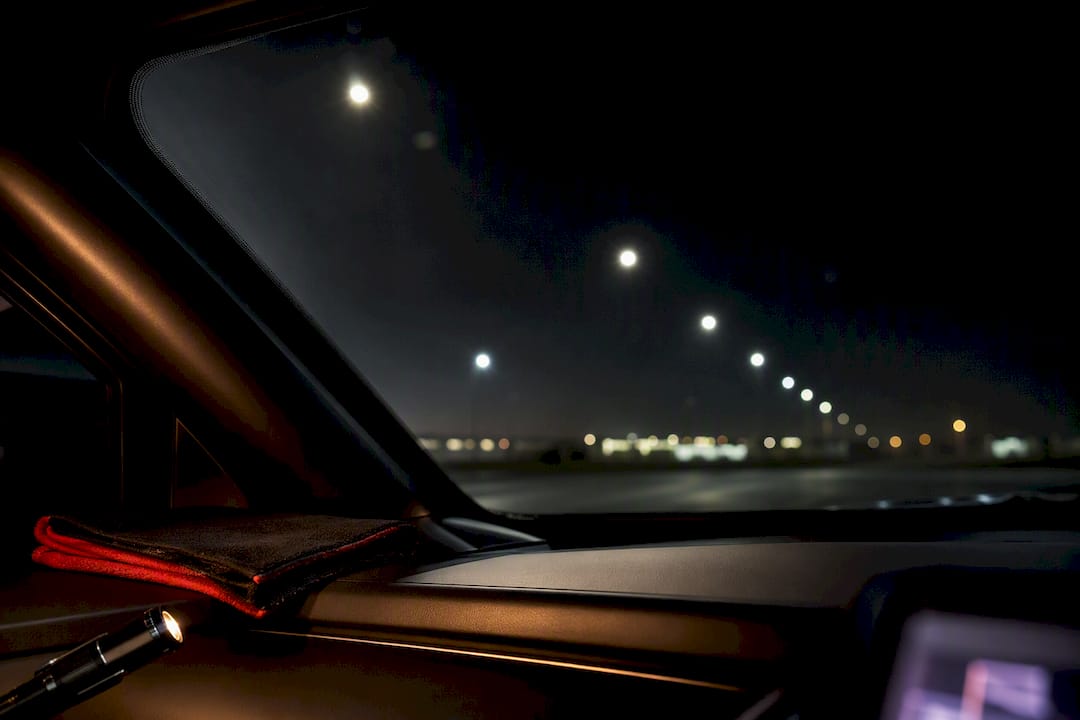
A properly specified, high-VLT ceramic film should not degrade your night vision. These films are engineered for optical clarity, not concealment, so a well-made install is close to invisible when you're looking through it at 70 mph in the rain or at dusk.
What you're actually watching for is installation quality, not the film itself:
- Haze or a slight cloudiness across the glass, especially noticeable under streetlights.
- Distortion near the edges or in your direct line of sight.
- A faint "double image" effect where headlights or taillights appear to ghost or split.
Pro Tip: Do a night test drive within the first week after installation, ideally on a route with streetlights and oncoming traffic. If you notice any ghosting or haze, call the installer immediately. Reputable shops fix optical defects under warranty rather than argue about them.
How Much Does Professional Ceramic Tint Installation Cost?
Windshield tint pricing depends on three variables: the film grade you choose, the complexity of your windshield's curvature, and the shop's reputation and equipment. A single-windshield ceramic install typically costs more per square foot than side or rear glass because of the precision cutting curved glass demands, while a full-vehicle ceramic package that includes the windshield runs higher still.
Professional installation earns its price in ways that matter specifically on a windshield:
- Precision computer-cut patterns that eliminate bubbling and edge lifting on complex curves.
- A shop-backed warranty that covers defects, not just the film manufacturer's coverage.
- Compliance guidance, including VLT testing before you drive off the lot.
- Lower risk of the optical distortion that turns a cheap DIY kit into a windshield replacement.
DIY windshield kits exist and cost less upfront, but the windshield is the worst place on your car to learn film application. A trapped air bubble or a misaligned edge on a side window is an inconvenience. The same mistake on a windshield sits directly in your line of sight every time you drive, and getting the VLT wrong can put you out of compliance without you realizing it.
How Do You Maintain and Care for Ceramic Window Film?
The curing period is the most fragile stretch of a film's life. Most installers ask you to leave windows up for several days after installation and to avoid ammonia-based glass cleaners indefinitely, since ammonia breaks down the adhesive layer over time.
- Skip automatic car washes with high-pressure jets for at least the first week.
- Use only ammonia-free glass cleaner for the life of the film.
- Ask your installer for their specific curing window in writing, since it varies by film and climate.
A solid manufacturer warranty typically covers bubbling, delamination, and adhesive failure. Ceramic Pro's Ceramic X line, for example, documents warranty terms alongside its IR rejection and UV blocking specs, which is the kind of transparency worth expecting from any brand you consider. Quality ceramic film should hold up for years without clouding; if you notice purple or brown discoloration, that's a sign of adhesive breakdown and a reason to call your installer, not wait it out.
How Do You Choose a Windshield Tint Installer?
Picking the wrong installer is how a good product turns into a bad experience. Run through this checklist before you commit:
- Ask for the film's spec sheet. You want the exact model name, VLT percentage, IR rejection number, and UV blocking rate in writing, not a verbal estimate.
- Get the warranty in writing. A legitimate shop puts bubbling, delamination, and adhesive failure coverage on paper before you pay a deposit.
- Confirm compliance documentation. The installer should offer a post-install VLT meter reading, especially for windshield work.
- Ask about experience with windshields specifically. Side and rear glass technique doesn't always translate to the tighter curves and stricter legal margins of a windshield.
Pro Tip: If a shop keeps steering you toward a metalized or dyed film "because it's cheaper" without addressing your questions about IR rejection numbers or compliance, that's your cue to walk. A shop confident in its product shows you the numbers without being asked twice.
Watch for red flags: no willingness to produce a spec sheet, vague answers about warranty coverage, or pressure to skip the legal conversation entirely. Our window tinting page walks through the material differences in more depth if you want to compare film families before you call around.
When Does Ceramic Windshield Film Actually Make Sense?
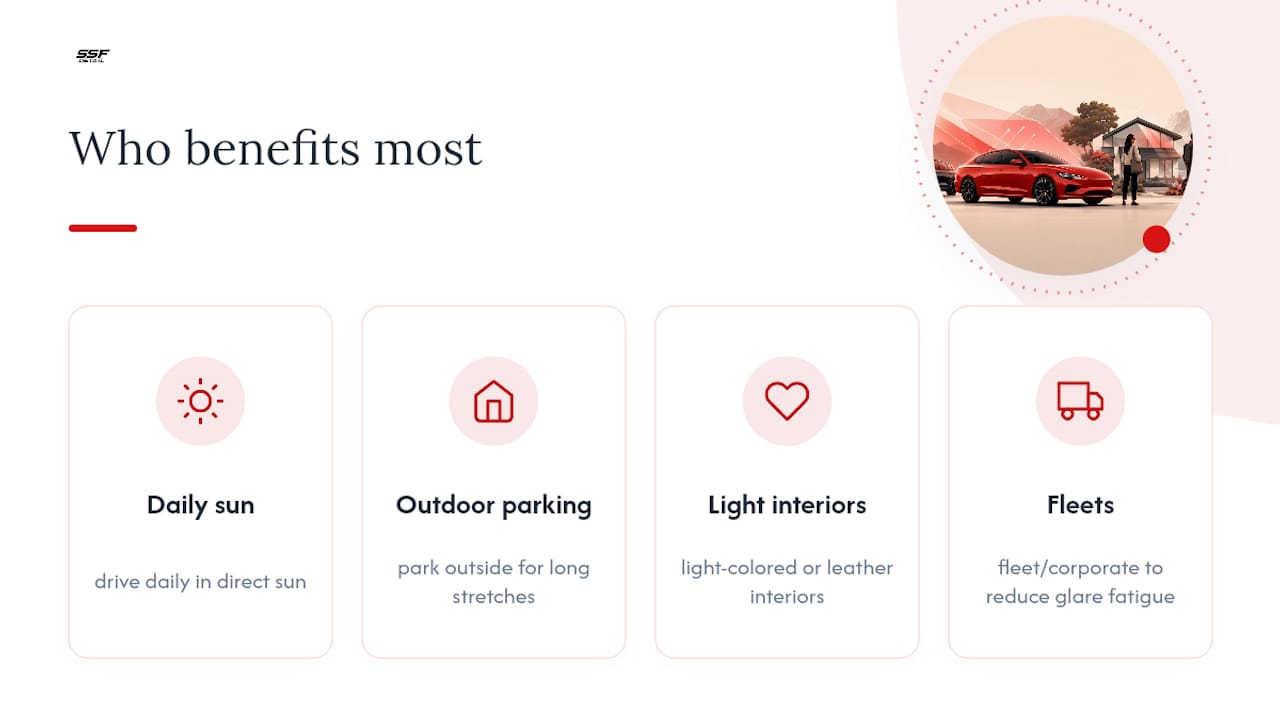
Having handled detailing and protection work across more than 1,350 vehicles, the pattern is consistent: clients who drive daily in direct sun, park outside for long stretches, or own vehicles with light-colored or leather interiors see the biggest return on windshield ceramic film. Fleet and corporate clients often add it specifically to cut driver fatigue from glare on long routes.
Every install that comes through gets Steven Shames' personal review before it leaves the shop. That standard exists because a windshield sits inches from your eyes at highway speed, and there's no acceptable margin for a wavy edge or a hazy patch.
— Martin
Get Professional Ceramic Windshield Tint Installed the Right Way
Clear ceramic windshield film installation should include compliance checks, upfront spec sheets, and personal review of every job to ensure quality and guarantee proper installation.
A professional appointment starts with an inspection of your windshield's curvature and existing glass condition, a walkthrough of film options and their VLT and IR rejection numbers, and paperwork covering your warranty and compliance documentation before any cutting begins. If you're also considering paint protection or a full detail alongside your tint, our paint protection film page covers how the two services pair together. Ready to see what clear ceramic film looks like on your vehicle? Visit our window tinting service page in Boca Raton to request a quote and get your VLT and film spec questions answered before you commit.
Sources
- Your guide to tinted windshields - Car and Driver
- SunTek — CoolSight clear window tint
- LLumar — clear tint information
- Ceramic Pro — Ceramic X product page
FAQ
Is Ceramic Tint on a Front Windshield Worth It?
Yes, when your state permits it and you choose a high-VLT clear film. You get meaningful UV and heat rejection without the visible darkening that runs afoul of windshield tint laws.
What Are the Downsides of Ceramic Tint?
The main downsides are cost compared to dyed film and the risk of poor installation, which can cause haze or distortion on a windshield's curved surface. Choosing a professional installer with a written warranty, like the coverage detailed on Ceramic Pro's product page, largely eliminates this risk.
Can Ceramic Tint Go on a Windshield?
Yes, clear and near-clear ceramic films are specifically formulated for windshield use in states that allow it. Products like SunTek's CoolSight line are built for this exact application, offering IR rejection without visible darkening.
Can You See at Night With Ceramic Tint?
Yes, properly installed high-VLT ceramic film should not noticeably affect night vision. If you notice haze, ghosting, or distortion under headlights after installation, that points to an installation defect rather than a limitation of the film itself, and it should be addressed under warranty.