
Most common tint jobs are legal on rear glass but illegal up front. Florida requires at least 28% VLT with no more than 25% reflectivity on front side windows, while rear side and rear windows must meet minimum visible light transmission limits that differ by vehicle type, with a reflectivity cap. Windshields only get a non-reflective strip above the AS-1 line.
TL;DR:
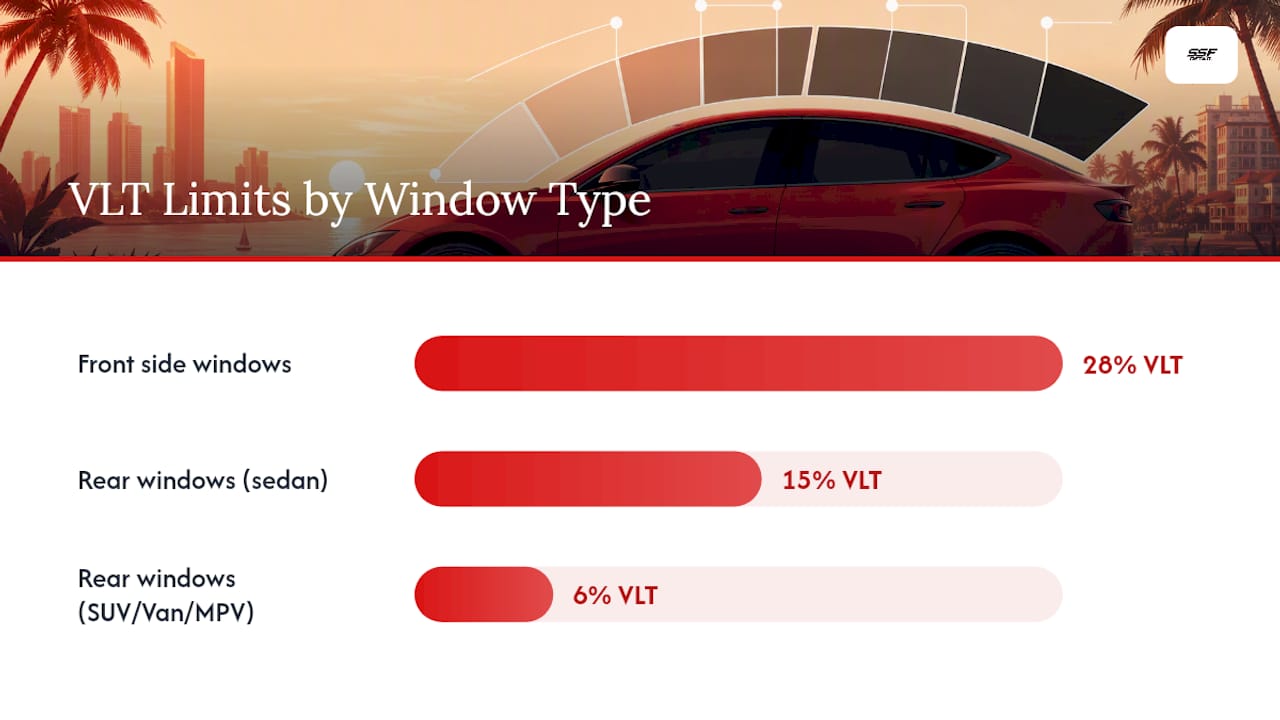
- Front side windows require at least 28% VLT for all vehicles, with reflectivity capped at 25%, making darker films illegal on front windows.
- Rear windows can legally have darker tint, down to 6% VLT for SUVs and minivans, but the same film is illegal for sedans if it falls below 15% VLT.
- Metallic, chrome, and mirrored films often exceed reflectivity limits and should be avoided in favor of neutral or dyed films to prevent citations.
- Only non-reflective strip above the AS-1 line is permitted on windshields unless a medical exemption applies; proper measurement is essential for compliance.
- Reputable installers must provide labeled, measured, and documented films, along with a warranty, to ensure a legal and enforceable tint job.
Table of Contents
- Florida Window Tint Law: Limits by Window and Vehicle Type
- What Reflectivity Rules Bar on Legal Window Tint Shades
- Where Can You Legally Tint a Windshield in Florida?
- Who Qualifies for a Medical Tint Exemption in Florida?
- How Do Police Measure Window Tint in Florida?
- What Your Installer Owes You: Compliance Labels
- Checklist: Avoiding a Tint Ticket in Florida
- Why South Florida Shops Take Compliance Seriously
- Get Tint Installed Right the First Time
- Primary Statutes and Forms Worth Bookmarking
- Sources
- FAQ
Florida Window Tint Law: Limits by Window and Vehicle Type
Florida Statutes Chapter 316.2953 and 316.2954 set the numbers every Florida driver needs to know, and the vehicle class you drive changes the math more than most people expect.
| Window | Sedan | SUV/Van/MPV | Reflectivity Cap |
|---|---|---|---|
| Windshield | Non-reflective strip above AS-1 line only | Same | Not applicable |
| Front side windows | 28% VLT minimum | 28% VLT minimum | 25% |
| Rear side windows | 15% VLT minimum | 6% VLT minimum | 35% |
| Rear window | 15% VLT minimum | 6% VLT minimum | 35% |
Every reading gets a built in cushion. That margin matters if your film is measured on a hot afternoon after the dash has baked for hours, since heat and film age can shift a reading a point or two.
The vehicle class distinction trips up a lot of SUV and minivan owners. A film that reads 20% VLT is flatly illegal on any front window in Florida, no matter what you drive, but that same film is perfectly legal on the rear windows and rear glass of an SUV, Jeep, or minivan, where the floor drops to 6%. On a sedan, though, 20% rear tint is legal too since it clears the 15% sedan minimum. Know which category your vehicle falls into before you order film.
What Reflectivity Rules Bar on Legal Window Tint Shades
Florida caps reflectance at 25% on front windows and 35% in the rear, measured on the non-film side of the glass under Chapter 316.2953. A film can pass the VLT test and still fail on shine.
Mirrored, chrome, and metallic finishes are the usual culprits. They look sharp in photos but often push reflectance past the legal ceiling even when the darkness number checks out. Stick with neutral gray or black dyed and ceramic films rather than color-shifting or high-metal-content options, and ask your installer for the reflectance spec sheet before it goes on the car. A film that meters fine for VLT can still generate a citation if reflectivity testing flags it separately.
Where Can You Legally Tint a Windshield in Florida?
Only above the AS-1 line, and only with a non-reflective strip, unless you hold a medical exemption. Chapter 316.2952 draws that line at the manufacturer's etched marking near the top of the glass, usually a small "AS-1" stamp printed by the windshield maker.
A competent shop measures down from the roofline and stops well short of eye level, applying a thin strip that blocks glare without touching the area a driver actually looks through.
Who Qualifies for a Medical Tint Exemption in Florida?
Drivers with qualifying medical conditions, such as light sensitivity from lupus or certain skin and eye disorders, can apply through the Florida Department of Highway Safety and Motor Vehicles using form HSMV 83390. A physician signs off, FLHSMV issues a certificate tied to that specific vehicle, and you keep it in the car at all times. Undercover law enforcement, licensed private investigators, and certified process servers carry separate statutory exemptions tied to their work.
Penalties split sharply by role. A driver caught with illegal tint gets a noncriminal traffic infraction under Chapter 316.2956, typically a base fine plus court costs that often lands between $70 and $150 depending on the county. An installer or seller who knowingly puts illegal film on a vehicle faces a second-degree misdemeanor, real criminal exposure that a fix-it ticket doesn't carry.
How Do Police Measure Window Tint in Florida?
Tint is a primary offense, meaning an officer can pull you over for dark glass alone, with no other violation needed. Roadside stops typically involve a handheld tint meter pressed against the glass, giving an on the spot VLT reading.
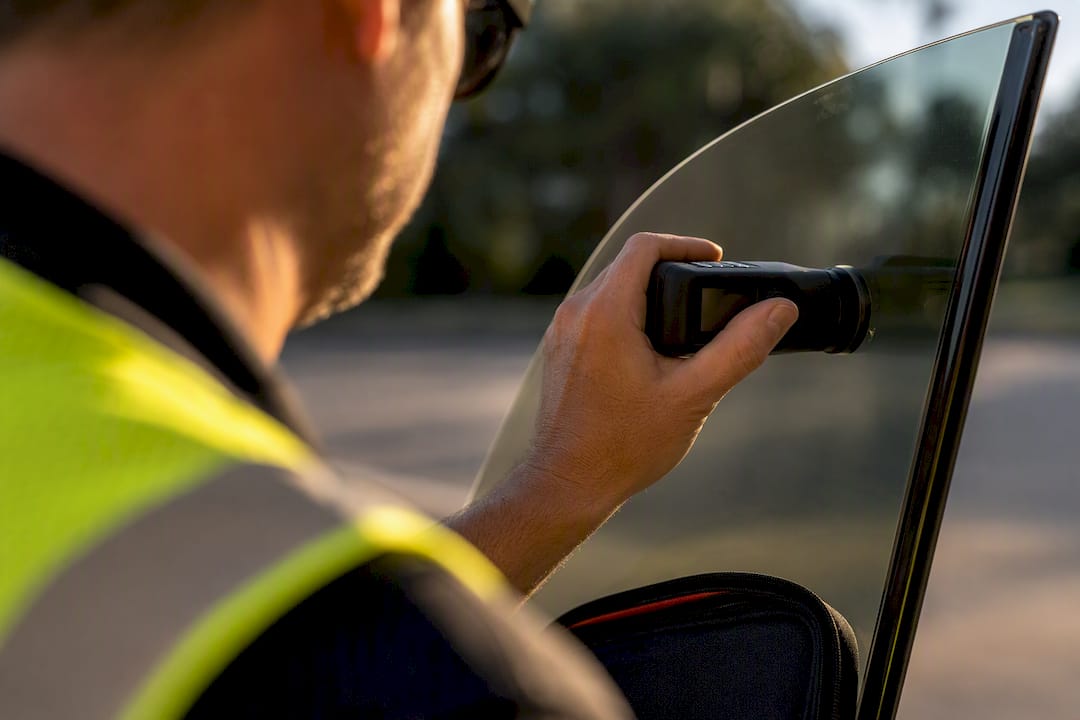
Ask for the number and a copy of it before you sign anything. If your reading sits right on that edge, request a second measurement or note the meter reading for your court date.
What Your Installer Owes You: Compliance Labels
Florida law under Chapter 316.2955 requires installers to affix a label identifying the film's trade name and the installing business. Insist on seeing it before you drive off.
Shops that actually know the statute won't install film outside these limits, because they're the ones facing a misdemeanor charge, not you. That's your protection as much as theirs. Before paying, get three things: the compliance label, a dated VLT measurement printout, and a written warranty. A shop that hesitates on any of the three is telling you something about how it operates. Our tint installation page walks through what a documented job actually looks like.
Checklist: Avoiding a Tint Ticket in Florida
Run through this before and after any tint job:
- Confirm the compliance label is affixed and legible.
- Get a printed or photographed VLT reading for every window, not just a verbal promise.
- Check whether your rear window is now fully opaque. Florida requires functioning dual side mirrors if it is.
- Keep any medical exemption certificate in the vehicle, not at home in a drawer.
- Save your receipt and measurement report in case you're ever cited and need to contest it.
Pro Tip: Photograph the compliance label and the meter reading on the day of install, and text yourself the numbers. If you're stopped a year later, that timestamped photo is often more useful than a fading memory of what the shop told you.
If you're driving out of state, remember Florida's numbers don't travel with you. Georgia, Alabama, and other neighboring states set their own limits, so a legal Florida tint job can still draw a citation across a state line.
Why South Florida Shops Take Compliance Seriously
Reputable installers document VLT before and after the job because they carry the legal exposure if a film exceeds Florida's limits, not the customer. At some professional detailing shops, every tint install gets measured and recorded, as missing labels or undocumented readings can cause issues months later. Choose a shop that hands you paperwork, not just a good-looking car.
— Martin
Get Tint Installed Right the First Time
Ssfdetail installs window tint the way the statute actually requires, and that's the real difference between a shop that gets you a compliant, documented job and one that leaves you guessing whether you'll get pulled over next week. Every install includes a compliance label, a dated pre and post measurement printout, and a written warranty handed to you before you leave the shop.
Every vehicle that comes through the door is carefully reviewed before service, whether it's a daily driver or part of a corporate fleet contract. If your current tint is peeling, bubbling, or you're just not sure it meets Florida's numbers, get a free estimate through our window tinting page and we'll measure your glass and tell you exactly where it stands, or check out Custom Signs Today's window lettering services for vehicle-specific decals that pair well with window treatments. If you're also weighing paint protection alongside tint, our ceramic coating services pair well with a fresh tint job for a full exterior refresh.
Primary Statutes and Forms Worth Bookmarking
For direct verification, read Section 316.2953 and Section 316.2954 on the Florida Senate's site, and download FLHSMV form HSMV 83390 if you plan to apply for a medical exemption. Keep a saved or printed copy handy.
Sources
- Chapter 316 Section 2953 - 2026 Florida Statutes - The Florida Senate
- FLHSMV Application for Sunscreening Medical Exemption (HSMV 83390)
FAQ
Is 20% or 35% tint darker?
The percentage refers to how much visible light passes through the film, so a lower number blocks more light and looks darker.
What are the new window tint laws in Florida for 2026?
Florida's core VLT and reflectivity limits under Chapter 316.2953 remain in effect for 2026, with front windows at 28% VLT and 25% reflectivity, and enforcement still relying on tint meters with a ±3% tolerance.