
Quality paint protection film lasts 5 to 10 years, with premium TPU films stretching to about 12 years under ideal care. Replace it once you see durable failure signs like yellowing, cracking, or adhesive lift, or once your warranted period runs out. Manufacturer warranty language and industry experience both point to the same rule of thumb.
TL;DR:
- Quality PPF generally lasts 5 to 10 years, with premium self-healing TPU films reaching up to 12 years under ideal care conditions.
- Durability varies significantly based on installation quality, environmental exposure, and maintenance habits, affecting the actual lifespan more than warranty periods.
- Signs indicating the need for replacement include permanent yellowing, cracking, edge lifting, bubbling, and loss of self-healing ability, often appearing gradually.
- Proper care involves gentle hand washing with pH-neutral soap, avoiding abrasive cleaners, automated brushes, and harsh chemicals that accelerate deterioration.
- Regular professional inspections every six months help identify early failure signs and prevent adhesive baking and paint damage from neglected old film.
Table of Contents
- How Long Does PPF Last on an Average Car?
- What Factors Determine How Durable PPF Really Is?
- What Are the Signs PPF Needs Replacement?
- How Do You Extend the Life of Your PPF?
- What Do PPF Warranties Actually Cover?
- When Does Leaving Old PPF On Become Risky?
- What Does a Professional PPF Inspection Actually Check?
- What Owners Get Wrong About PPF Lifespan
- Get a Professional PPF Assessment Before Small Issues Become Big Ones
- Sources
- FAQ
How Long Does PPF Last on an Average Car?
The honest answer depends on which film sits on your paint, but the bands are consistent across the industry.
Entry-level PVC film typically holds up for a few years before yellowing or clouding sets in. Mid-tier TPU film, the material most shops install today, runs several years with reasonable care, according to installer guides like Maryland Clean Rides. Premium TPU film with a self-healing topcoat can last longer when the car is garaged and maintained properly.
Those numbers come from two different places, and mixing them up is where a lot of confusion starts. Manufacturer data sheets talk about "expected durability," a lab-informed estimate of how long the film should perform under normal conditions. The "warranted period" is a separate, contractual number tied to installation quality, storage, and exposure zone. Avery Dennison's warranty bulletin lists expected outdoor life at up to 10 years for some products, but the warranted term shrinks or grows depending on how and where the film was installed.
Real-world reports back up the range but show how much variance actual driving conditions create:
- Garage-kept vehicles with annual inspections tend to land at the top of the manufacturer's range, sometimes beyond it.
- Daily drivers exposed to sun, salt, and stone chips often see film life trend toward the lower end.
- Owners on detailing forums commonly report keeping film on high-exposure panels like the hood and front bumper for 5 to 6 years before considering replacement, even when the film technically has life left.
That gap between lab estimate and garage reality is exactly why a spec sheet number alone won't tell you when your film needs to come off.
What Factors Determine How Durable PPF Really Is?
Two cars with identical film can age at completely different rates. The film itself only accounts for part of the story.
Material and topcoat quality set the ceiling. TPU with a self-healing topcoat resists yellowing and shrugs off light swirl marks that would otherwise dull PVC film within a couple of years. Thicker film generally resists rock chips better, though thickness alone doesn't guarantee longevity if the topcoat chemistry is weak.
Installation quality sets how close you get to that ceiling. Poor edge sealing lets moisture and cleaning chemicals creep under the film, which is the single fastest path to lifting and bubbling. Rushed surface prep, meaning any leftover wax, oil, or contamination trapped under the film, weakens the bond from day one and shows up as edge failure months later, not years.
Environment and usage do the rest of the damage:
- UV exposure breaks down topcoat chemistry over time, which is why South Florida cars often show earlier wear than film in milder climates.
- Coastal salt air accelerates adhesive breakdown at the edges.
- Gravel roads and highway driving increase stone-impact frequency, which stresses the film's self-healing properties more often.
- Automated car washes with stiff brushes introduce micro-scratches that a hand wash would avoid entirely.
Maintenance habits tie all of this together. A film that's washed correctly and protected from harsh chemicals can outlast identical film on a neglected car by years, not months.
Pro Tip: Ask your installer for the specific film's data sheet before booking. "Premium PPF" means very different things depending on whether the shop is using entry-level TPU or a top-tier self-healing product.
What Are the Signs PPF Needs Replacement?
Film doesn't fail overnight. It gives you warnings, and catching them early saves your paint underneath.
- Yellowing that won't buff out. Early yellowing is often surface-level and cleanable. Permanent yellowing means the film's UV inhibitors have broken down and the discoloration is baked into the material.
- Cloudiness or hazing. If polishing doesn't restore clarity, the film's internal structure has degraded, not just the surface.
- Cracking or brittleness. Film should flex slightly when pressed. Brittle film that cracks at the edges or over body contours has lost its elasticity and is close to failing outright.
- Edge lifting or bubbling. This points to adhesive failure, and it only gets worse. Moisture and dirt work into the gap, accelerating the problem.
- A self-healing topcoat that no longer heals. Run a hair dryer or warm water over a light swirl mark. If the film doesn't smooth back out the way it did when new, the topcoat is spent even if the film looks fine otherwise.
Any one of these on its own might just need a spot repair. Two or more together usually means it's time to talk replacement.
How Do You Extend the Life of Your PPF?
Most film doesn't die of old age. It dies of neglect, bad chemicals, or a wash routine that's rougher than it needs to be.
The safe washing routine is simpler than most owners expect: hand wash every one to two weeks with a pH-neutral soap, a clean microfiber mitt, and the two-bucket method to avoid dragging grit across the film. Skip automated tunnel washes with brushes. They're the fastest way to introduce fine scratches that dull the film's clarity over time, and repeated abrasion works against the self-healing topcoat you paid for.
Avoid these on any PPF, regardless of brand:
- Ammonia-based glass cleaners, which can degrade topcoat chemistry.
- Abrasive compounds or clay bars not rated safe for film.
- Pressure washers held too close to edges and seams, which can force water under the film.
- Dish soap, which strips protective hydrophobic properties faster than dedicated car wash soap.
Parking matters more than most owners give it credit for. Garage or covered parking cuts cumulative UV exposure, which is the single biggest driver of long-term yellowing, according to installer guides on film care from Swissvax. If covered parking isn't an option, a breathable car cover helps.
Spot repairs make sense for isolated stone chips or a single lifted edge. Full replacement makes sense once damage spans multiple panels or the topcoat has stopped self-healing across the board. Either way, inspect the film every six months and photograph problem areas. That documentation matters if you ever need to file a warranty claim.
Pro Tip: Keep a simple photo log on your phone, front bumper, hood, mirrors, dated every six months. It takes two minutes and it's the difference between a smooth warranty claim and a denied one.
What Do PPF Warranties Actually Cover?
Warranty language trips up more owners than the film itself does. Reading it correctly saves you from a denied claim down the road.
"Expected durability" and "warranted period" are not the same number, and manufacturers are explicit about that distinction. Expected durability is a performance estimate based on standard conditions. The warranted period is the actual contractual promise, and it shifts based on where and how the film was installed, according to Avery Dennison's warranty documentation.
Most manufacturer warranties cover:
- Manufacturing defects, including premature yellowing, cracking, and bubbling that occurs under normal use.
- Adhesive failure that isn't caused by improper installation or aftermarket products.
- Topcoat performance issues when the film was applied and maintained per the manufacturer's instructions.
Most exclude:
- Damage from extreme environmental exposure outside the product's rated zone.
- Misuse, including improper cleaning products or DIY removal attempts.
- Stone chips, road debris impact, or collision damage. These aren't defects. They're exactly what the film is designed to absorb.
Exposure zone matters more than owners realize. A film rated for a temperate climate installed on a car that lives in intense coastal sun may see its warranted period shortened, even though the film itself is identical to one installed elsewhere. Save your installation receipt, product data sheet, and dated photos of the film in good condition. That paperwork is what turns a warranty conversation into an approved claim instead of a dispute.
When Does Leaving Old PPF On Become Risky?
Film that's past its prime isn't just cosmetically disappointing. It puts your actual paint at risk the longer it stays on.
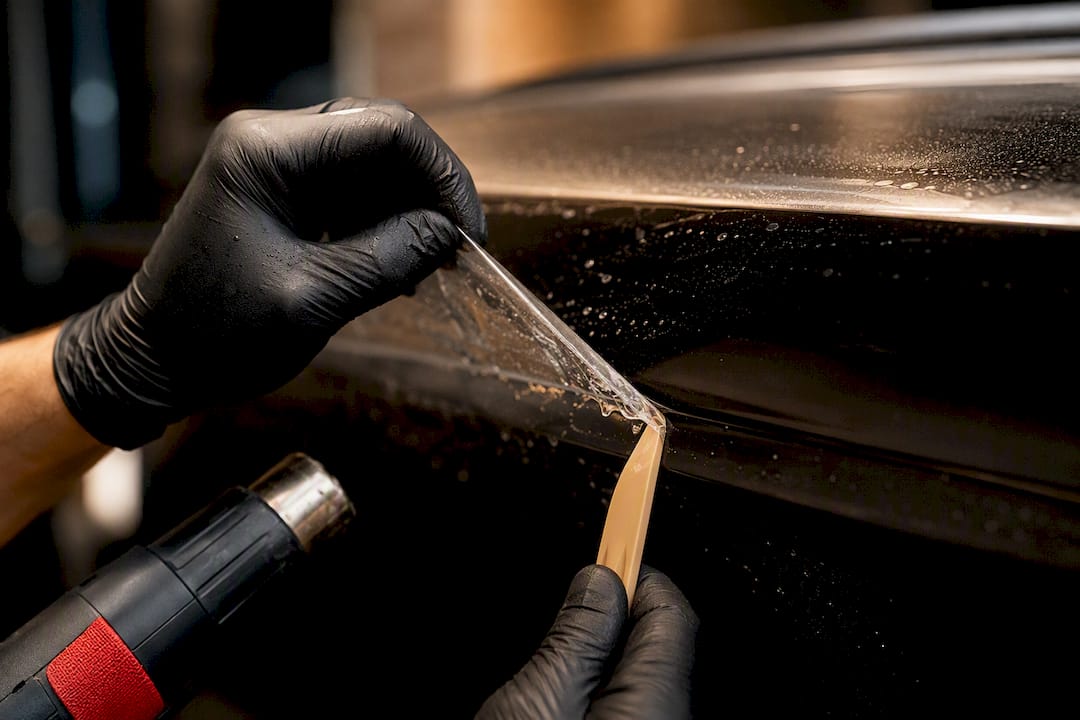
Adhesive baking is the technical term for what happens when film sits through enough heat cycles that the adhesive layer chemically bonds harder to the clear coat than it was designed to. You'll notice it as film that's genuinely difficult to peel, sometimes leaving a hazy residue or, in worse cases, pulling clear coat with it.
The longer film stays past its service life, the higher that risk climbs. Years of sun exposure and temperature swings compound the adhesive bond, according to installer guides on PPF longevity. This is exactly why professional removal matters once film shows failure signs. A trained installer knows how to apply heat and tension correctly to avoid pulling clear coat, something a DIY approach with a heat gun and a credit card rarely handles safely. If your film shows two or more failure signs from the list above, schedule removal before the adhesive has more time to bond harder.
What Does a Professional PPF Inspection Actually Check?
Professional inspections should follow the same checklist, whether the car is a daily driver or a weekend show piece. We check edge integrity first, since that's where failure almost always starts. Then clarity across high-exposure panels, adhesion at seams and body lines, and whether the topcoat still self-heals under a warm water test.
Across the vehicles we've serviced, and we're well past 1,350 cars at this point, the pattern holds steady: cars kept in South Florida's sun and humidity that skip regular inspection tend to show edge lifting and topcoat wear earlier than the manufacturer's stated range would suggest. Cars with periodic professional inspections often reach the upper end of that range instead.
Installation quality is the variable most owners never think about until it's already a problem. Film applied with proper edge wrapping and clean prep work will consistently outlast identical film rushed onto a car with leftover wax or contamination under the surface. That difference shows up in year three, not year one, which is exactly why it gets overlooked.
That's also why we build inspection into our PPF service rather than treating it as an upsell. Catching a failing edge at year six is a spot repair. Catching it at year nine, after adhesive baking has set in, is a full removal and repaint conversation that nobody wants to have.
What Owners Get Wrong About PPF Lifespan
The conventional advice treats PPF lifespan like a warranty countdown: install it, forget it, replace it when the years run out. That's backwards. The warranty number is a contractual floor, not a forecast of when your specific film will fail on your specific car in your specific climate.
What actually predicts replacement timing is the combination of film grade, installation quality, and how the car is used and washed. A premium TPU film on a garage-kept car can beat its warranted period by years. A mid-tier film on a coastal daily driver washed at automated tunnels can fall short of it. Both outcomes are normal, and neither means the film was defective.
If you take one thing from this, prioritize the inspection habit over the calendar. A six-month visual check catches edge lift and topcoat fatigue while a spot repair still solves it. Waiting for a warranty date to arrive means you're reacting to a number instead of watching what's actually happening on your paint.
— Martin
Get a Professional PPF Assessment Before Small Issues Become Big Ones
Guessing whether your film has another year left, or whether that hazy patch is cosmetic or structural, isn't a bet worth making on paint you've already invested in protecting. Professional PPF services for South Florida owners include inspections of edges, clarity, and adhesion to determine whether a spot repair, full replacement, or another year or two of normal wear is appropriate.

DIY removal is where most paint damage actually happens, not from the film itself but from someone rushing the peel with the wrong tools. A professional assessment catches failure signs before they become a clear coat problem, and our paint protection film service covers everything from initial installation to replacement when your film has run its course. If you're also weighing long-term protection options, our ceramic coating service pairs well with fresh PPF for owners who want maximum durability. Request a quote today and find out exactly where your film stands.
Sources
- Clear PPF Warranty Bulletin 1.0 ANZ — Avery Dennison
- How long does a PPF last? Lifespan & care explained — SWISSVAX
FAQ
How often do you need to replace PPF?
Most owners replace quality TPU film every 5 to 10 years, though premium film in ideal conditions can last closer to 12 years. Replacement timing depends more on visible wear signs than a fixed calendar date.
Is PPF really worth it?
Yes, for owners who plan to keep a car long-term or maintain resale value, since PPF absorbs stone chips and road debris that would otherwise damage the clear coat permanently. The cost of film replacement is almost always lower than paint correction or a repaint.
How does PPF look after 5 years?
Well-installed TPU film on a garage-kept car often still looks clear and performs close to new at the five-year mark. Film on a daily driver in harsh sun or coastal air may show early yellowing or reduced self-healing by that point.
Can you wax a car with PPF?
Skip traditional wax on PPF, since it can interfere with the self-healing topcoat and trap grime at the edges. Use a PPF-safe sealant or ceramic spray coating instead, which protects without compromising the film's performance.