
Matte/satin paint protection film is widely regarded as the most effective long-term defense for a factory matte finish, guarding against rock chips, scratches, and stains while preserving the low-gloss look. Matte-safe ceramic coatings add stain resistance and easier cleanup, but they do not stop physical damage the way PPF does. Whatever you choose, stay away from waxes, polishes, and abrasive compounds. Those products burnish matte texture until it starts looking glossy in patches, and that damage is permanent.
TL;DR:
- Matte paint protection film offers the best impact resistance but requires professional installation and periodic edge inspections to ensure durability.
- Matte-safe ceramic coatings improve stain resistance and ease cleaning but do not shield against physical damage like chips or scratches.
- Proper maintenance involves gentle, matte-safe products and avoiding abrasive polishes, waxes, or automatic washes that can permanently damage the low-gloss surface.
- Full-body PPF can cost several thousand dollars, while ceramic coatings are a less expensive complement; warranties typically cover manufacturing defects, not impact damage.
- Always verify film compatibility, finish match, and warranty registration upfront to ensure long-term protection and proper coverage, especially on matte or satin finishes.
Table of Contents
- PPF vs. Matte-Safe Coatings vs. Maintenance-Only: Which Fits Your Priorities?
- Paint Protection Film for Matte Cars: How It Works and What Sheen You'll Get
- Matte-Safe Ceramic Coatings: What They Actually Do
- How to Wash and Maintain a Matte Finish Without Ruining It
- What Matte Paint Protection Costs and What the Warranty Actually Covers
- When to Hire a Pro: An Installer Checklist Worth Using
- Why Most Matte Paint Advice Gets the Order Backward
- Protect Your Matte Finish With SSF Detail
- Sources
- FAQ
PPF vs. Matte-Safe Coatings vs. Maintenance-Only: Which Fits Your Priorities?
Your choice usually comes down to what you're protecting against. Rock chips and highway debris call for film. Stains and easy cleanup call for coating. A tight budget calls for a disciplined wash routine and nothing else.
- Matte/satin PPF: Best physical protection against chips, scratches, and road grime. Lasts roughly 5 to 10 years depending on the product line, but requires professional installation and periodic edge inspection.
- Matte-safe ceramic coating: Reduces staining and water spotting, cuts wash time, but offers no defense against impact damage. Typically, reapplied or refreshed every 1 to 3 years.
- Maintenance-only: Lowest upfront cost, but the surface stays fully exposed to chips, bird droppings, and UV etching. Success depends entirely on how consistently you wash and how carefully.
Full-body PPF installs commonly run into the thousands of dollars, which is why most owners layer their protection: film where impact risk is highest, coating for the rest.
Paint Protection Film for Matte Cars: How It Works and What Sheen You'll Get
Matte and satin PPF works as a sacrificial layer bonded directly to the clear coat. Rocks, sand, and road debris strike the film instead of the paint underneath, and many matte films now carry hydrophobic and self-healing topcoats that shed water and shrug off light swirl marks when warmed by sunlight. The Scotchgard Pro Series 200 Matte film from 3M is built around exactly this combination: a low-gloss surface layer over a protective film designed to absorb rock chips and scratches without dulling the finish over time.
Not every matte film reads the same way in daylight. Some products deliver a true, flat matte, while others land closer to satin with a faint sheen under direct sun. STEK's DYNOmatte-flat is marketed specifically as a truer matte alternative to satin-leaning films, which tells you finish variation between brands is real, not marketing noise. Never approve a full install off a photo or a swatch card.
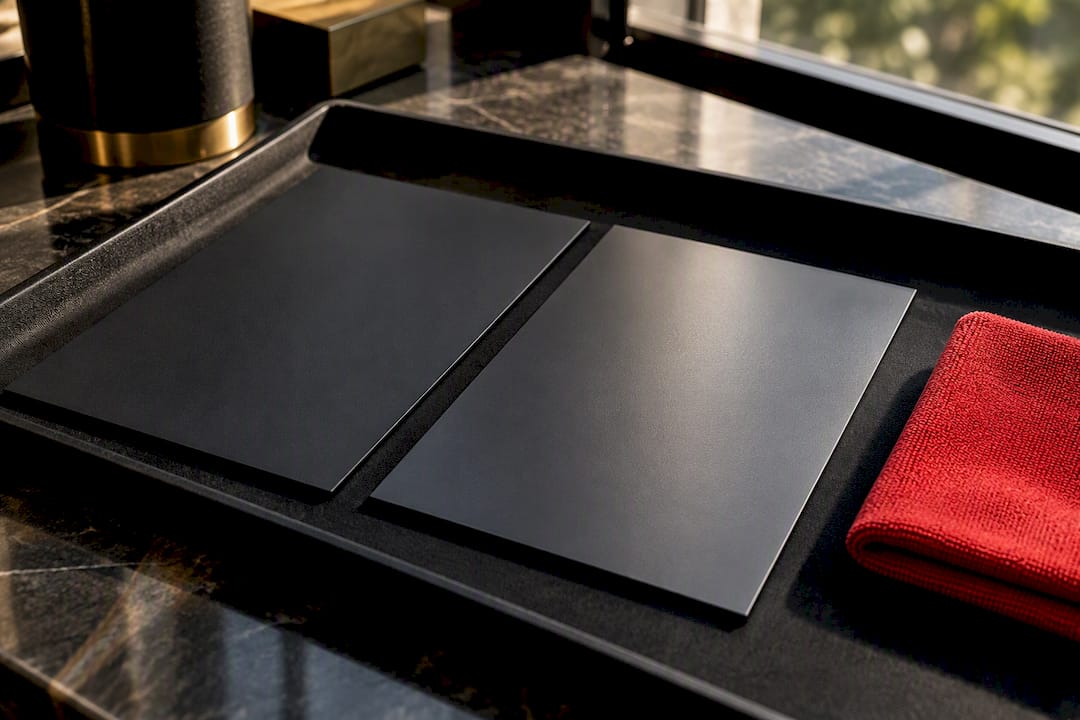
Pro Tip: Ask your installer for a sample panel in the exact film you're considering, then look at it in direct sun, in shade, and under indoor lighting before you sign off. A film that looks perfect in the showroom can read glossy or blotchy once it's on your hood in July.
Before booking an install, ask your shop:
- Is the film registered with the manufacturer for warranty coverage, and who handles that paperwork?
- Does the finish match your factory matte paint, or is it closer to satin?
- What's the process if a panel needs repair or replacement years down the line?
Matte-Safe Ceramic Coatings: What They Actually Do
A matte-safe ceramic coating is a distinct formulation, engineered to bond to the surface without filling in the microtexture that gives matte paint its low-gloss look. Standard glossy ceramic coatings will do exactly that: fill the texture and leave your matte hood looking semi-gloss. Dr. Beasley's matte-care guidance recommends dedicated matte-safe products for exactly this reason, alongside matching maintenance sprays.
What a matte-safe coating buys you:
- Noticeably easier cleaning, since dirt and grime release faster from a coated surface.
- Better resistance to staining from bird droppings, tree sap, and industrial fallout.
- A layer of UV protection that helps slow fading on darker matte colors.
What it will not do is stop a chip from a highway rock. Coating alone leaves the paint physically exposed, which is why owners chasing serious protection usually run PPF underneath the coating rather than picking one or the other. If you're coating over an existing film install, confirm compatibility with your installer first. Some film manufacturers restrict which coating lines are approved for use over their product, and going outside that list can affect your warranty.
How to Wash and Maintain a Matte Finish Without Ruining It
Matte texture is unforgiving. Get the wash routine wrong even once, and you can leave a permanent glossy patch that no amount of correction fixes. Follow these steps every time:
- Pre-rinse the entire vehicle to knock loose grit before any contact touches the surface.
- Wash with a matte-safe shampoo, never a standard car soap with gloss enhancers or waxes blended in.
- Use the two-bucket method: one bucket for clean suds, one for rinsing your wash mitt, to keep grit out of the soap.
- Wipe forward and back in straight lines, never in circles. Circular motion is what burnishes matte texture into a shine.
- Dry with a soft microfiber towel or let the car air-dry in shade to avoid water spotting.
For spot cleaning between full washes, reach for a matte-safe detail spray or a non-abrasive cleaner made for low-gloss finishes. PPG's matte finish care guide is explicit on what to avoid: no polishing, no wax, no rubbing compounds, and no mechanical brush washes at the automatic car wash.
Pro Tip: Keep a dedicated microfiber towel set just for your matte panels. Cross-contaminating with towels that have touched wax or polish residue is a common way owners accidentally introduce shine where they don't want it.
What Matte Paint Protection Costs and What the Warranty Actually Covers
Front-end or partial PPF coverage typically runs in the low thousands, while full-body matte film installs climb higher depending on panel count and film brand. Matte-safe ceramic coatings generally cost less than full-body film but still represent a real investment given the surface prep involved.
- Manufacturer warranties on matte PPF usually cover defects like yellowing, cracking, and delamination.
- Most exclude impact damage, improper maintenance, and issues traced to a bad installation rather than the film itself.
- Madico's Protekt Satin/Matte PPF and Solar Gard's Clearshield Pro Matte both advertise multi-year coverage tied to hydrophobic, stain-resistant topcoats.
- Some film makers extend warranty length when the film is topped with a manufacturer-approved ceramic coating, so ask before assuming your combo voids anything.
Before you pay a deposit, confirm the installer will register your warranty and that coverage transfers if you sell the car within the warranty period. Unregistered installs are the single most common reason owners discover, years later, that they have no coverage at all.
When to Hire a Pro: An Installer Checklist Worth Using
Matte film and matte-safe coating both reward careful installation and punish shortcuts. A shop that knows what it's doing will walk you through a process, not just a price.
Before you book, the installer should offer:
- A sample or test panel in your exact film finish, checked under multiple lighting conditions.
- Clear warranty registration, done at the time of install, not left to you afterward.
- Visible attention to seams, edge wrapping, and panel prep before the film ever goes on.
- A straight answer about whether coating over the film is approved by the film manufacturer.
Walk away if a shop offers to "polish" your matte paint, can't produce a sample panel, or gets vague when you ask about warranty paperwork. Those are the three biggest red flags in this category. At SSF Detail, every install is personally reviewed by owner Steven Shames before it leaves the shop, and the team can walk you through finish samples for both film and coating options. Bring photos of your car in different lighting to your consultation, and ask to see examples of matte installs the shop has completed locally.
Why Most Matte Paint Advice Gets the Order Backward
Too much matte-care content online treats coatings and film as interchangeable, or worse, pushes coating as the primary defense because it's the easier sell. That's backward. Coating protects against chemical staining and simplifies washing, but it does nothing when a rock kicks up off the highway at speed. If you're spending real money to protect a matte finish, physical protection has to come first.
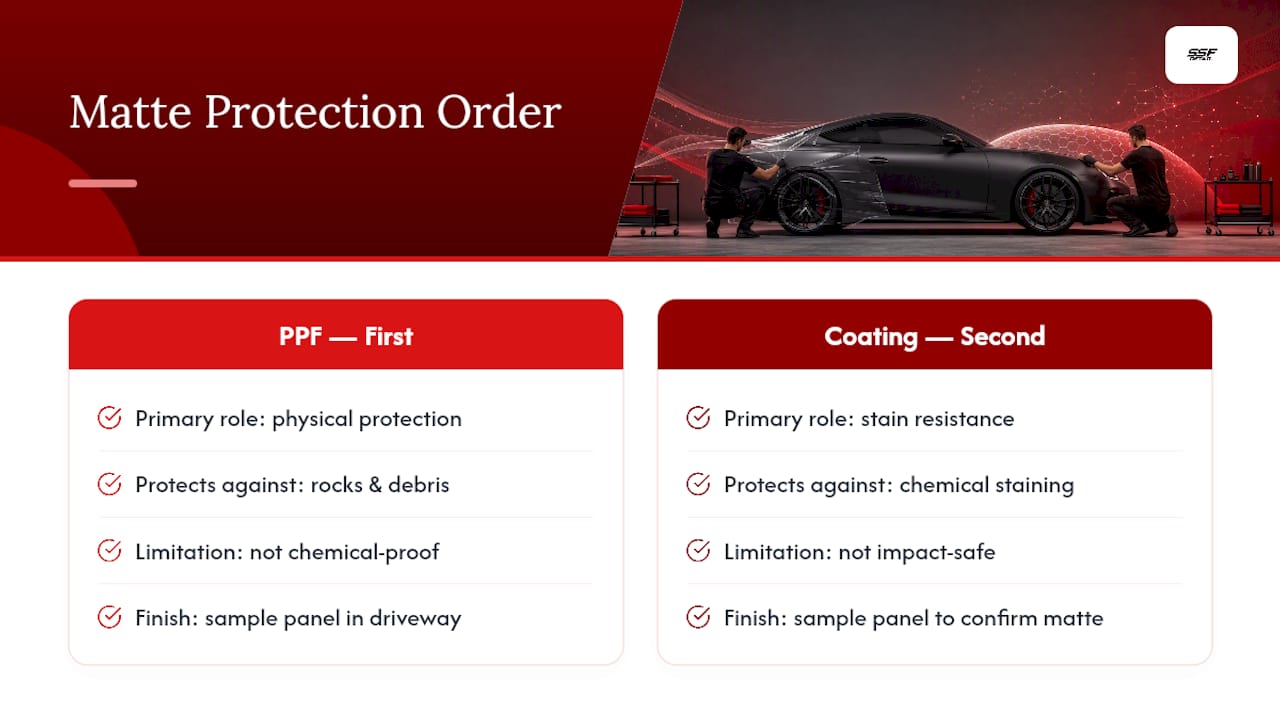
The bigger blind spot is finish matching. Owners get so focused on protection specs that they skip the sample panel step, then get a film installed that reads slightly satin instead of true matte under sunlight. That's not a defect. It's a mismatch you could have caught before installation. Insist on seeing the exact film on a panel, in your driveway, before committing to a full-body wrap.
Prioritize matte-safe PPF for anything you drive daily or take on the highway. Add a matte-safe coating on top if staining and cleanup matter to you. Skip both only if you're genuinely willing to accept the risk of permanent chips and never touch a polish or wax again.
— Martin
Protect Your Matte Finish With SSF Detail
SSF Detail is the alternative to guessing your way through matte paint protection: every install, from film selection to coating compatibility, is personally reviewed by owner Steven Shames before your car leaves the shop.

Our team works with full body PPF coverage, front-end packages, and matte film options built to preserve factory sheen instead of fighting it, and we can walk you through matte-safe ceramic coating options like Basic Ceramic, Advanced Graphene, and Pro Borophene for added stain resistance. Beyond the install, ongoing maintenance plans help keep your finish looking the way it did on day one. With more than 1,350 vehicles serviced, SSF Detail brings the same owner-approved attention to every matte project, whether it's a daily driver or a track car. Request a quote through our paint protection film page and bring photos of your vehicle to your consultation so we can recommend the right film and coating combination for your finish.
Sources
- Scotchgard™ Paint Protection Film Pro Series 200 (3M) technical overview
- DYNOmatte-flat (STEK) product page
- Matte finish care guide (PPG)
- Matte Paint Coating product page and care guide (Dr. Beasley's)
FAQ
What Is the Best Type of Paint Protection for Matte Paint?
Matte or satin paint protection film is the strongest option because it physically blocks rock chips, scratches, and road debris while preserving the low-gloss look. A matte-safe ceramic coating works well as a second layer for stain resistance, but it should not replace film if impact protection is your priority.
What Are the Disadvantages of Matte Paint?
Matte paint shows swirl marks and glossy patches easily if washed or polished incorrectly, since any abrasive contact can burnish the texture into a shine. It also tends to show staining from bird droppings, tree sap, and road grime more visibly than gloss finishes, which makes prompt cleaning more important.
How Much Does Matte PPF Cost?
Costs vary by coverage area, with front-end or partial installs running less than full-body coverage. SSF Detail's Basic Front End packages start at 1000 USD, while full body coverage starts at 5999 USD, depending on the vehicle and film chosen.
Is Ceramic Coating Worth It for Matte Paint?
A matte-safe ceramic coating is worth it if you want easier cleaning and better stain resistance, but only when the formulation is specifically designed not to fill matte texture. It does not protect against chips or scratches, so it works best alongside film rather than as a standalone solution.