
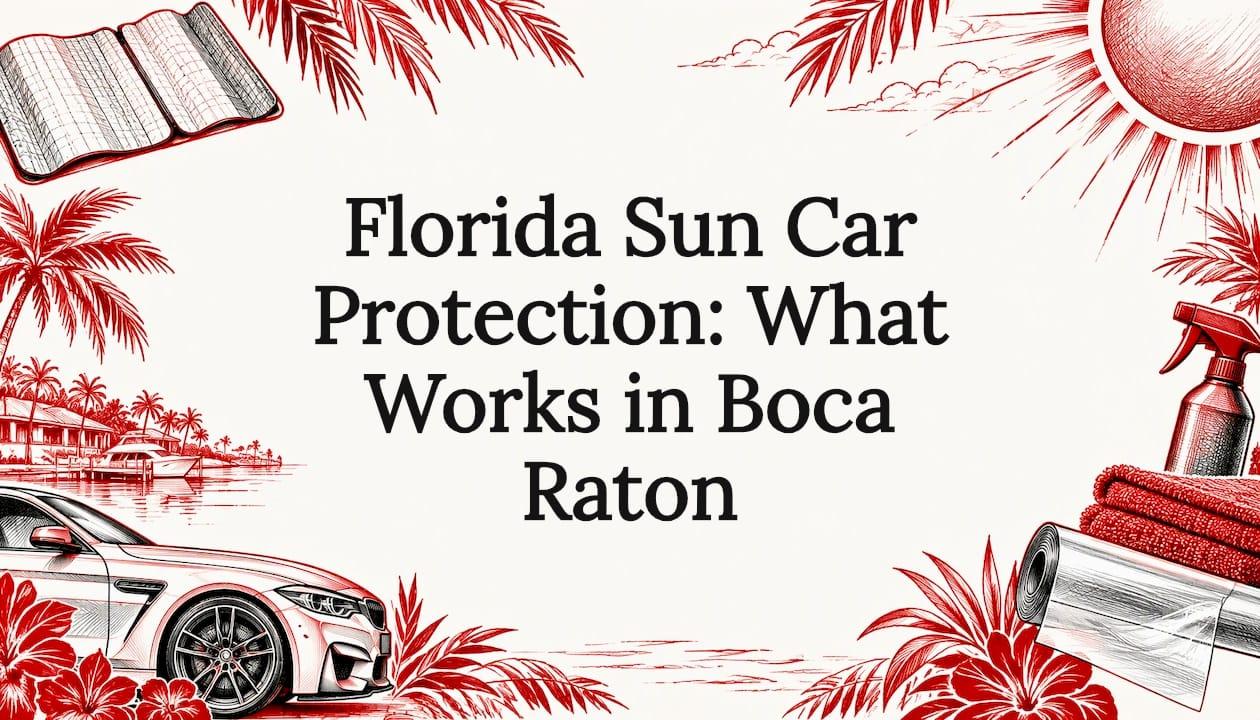
The best protection against Florida's sun is a layered one: window tint for the glass and cabin, paint protection film (PPF) or ceramic coating for the paint, and a regular maintenance wash to keep both working. Shade and a sunshade help on top of that, but they only work while you are parked. Tint, coating and film work on every drive, in every lot, every day. At SSF Detail in Boca Raton, we install all three, and every vehicle is personally inspected and approved by our owner, Steven Shames.
This guide explains what the sun actually does to a car here, what each layer protects, what it costs at our shop, and how to keep a protected car looking new.
TL;DR
- Florida sun attacks a car three ways: heat in the cabin, UV on the glass and interior, and UV plus heat on the paint and clear coat.
- Tint handles the cabin and glass, PPF or ceramic coating handles the paint. Each covers a different weak point, so the strongest setup combines them.
- At SSF Detail, ceramic coating starts at $1,149, front-end PPF at $1,000 and full-body PPF at $5,999.
- Protection only lasts with upkeep: regular washing, interior conditioning and a maintenance schedule.
- Florida sets legal minimums for tint darkness, so choose a film that is both effective and legal.
Table of Contents
- What Florida's sun actually does to a car
- The protection layers, and what each one covers
- Which setup fits which owner
- Daily habits that cut sun exposure
- Why maintenance decides how long protection lasts
- Choosing a shop: what to look for
- Our perspective
- Start with a plan for your car
- FAQ
- Sources
What Florida's sun actually does to a car
Three things happen to a car parked outside in Palm Beach County, and each needs a different fix.
Heat. A Florida Solar Energy Center study measured unshaded cars in Cape Canaveral commonly reaching about 150°F inside, with dashboards near 200°F. That heat bakes dashboards, dries out leather and plastics, and stresses adhesives and trim. It is also why the car feels unusable when you get in at 3 p.m.
UV radiation. Ultraviolet light fades fabrics and stitching, dries and cracks leather and soft-touch surfaces, and breaks down the clear coat on the exterior. Glass does not stop all of it. In a peer-reviewed laboratory study, ordinary automotive glass reduced UV-driven cell damage by 29%, UV-filtering window film by 90%, and glass plus film by 93%, compared with unfiltered exposure. So the side windows next to you are not as protective as they look.

Sun plus everything else. Here the sun rarely works alone. Salt air, love bugs, bird droppings, road grit and afternoon storms all land on paint that is already heated and weakened. Clear coat that is dull, hazy or peeling is usually the result of years of that combination, not one bad summer.
For a luxury or exotic vehicle, that matters more. Premium paint finishes show swirls, fading and etching more readily, and resale value follows condition. Our own guide to protecting your car from Florida's sunlight and salty air goes deeper on the coastal side of this.
The protection layers, and what each one covers
It helps to think of the car in zones. Each zone has a best tool.
| Zone | Main threat | Best protection |
|---|---|---|
| Side and rear glass, cabin | UV, solar heat, fading | Window tint |
| Paint, front end and high-impact areas | Rock chips, bugs, UV, etching | Paint protection film |
| Paint, whole car | UV, water spots, contamination, weathering | Ceramic coating |
| Interior surfaces | Heat, UV, cracking, fading | Tint, conditioning, regular care |
| Everything, over time | Dirt, salt, neglect | Maintenance detailing |
Window tint: the cabin layer
Tint is the single biggest upgrade for interior comfort and interior preservation. The study above shows how much more UV a quality film stops than glass alone. Our window tint page covers full car tint, and we quote it to the vehicle rather than list a flat price.
Two points are worth knowing before you choose a film:
- Darkness and heat rejection are different things. An SAE technical paper describes a film built to reflect solar infrared while keeping high visible light transmission. In practice, a light, legal film can still manage heat, and a very dark film is not automatically a cooler one.
- Florida limits how dark you can go. Passenger cars must keep minimum visible light transmission (VLT, the percentage of light that passes through the glass), with a higher minimum at the front side windows than at the back. Our Florida window tint law guide lays out the numbers and what to confirm before you book, and our explanation of window tint percentages shows how film plus factory glass adds up to the final reading. For the UV and heat-rejection side, see our guide to window tint benefits.
Paint protection film: the physical layer
PPF is a clear urethane film applied over the paint. It is thick enough to absorb the small impacts that sunlight cannot cause but heat makes worse: rock chips, bug acid and road debris. Quality films are elastomeric and self-healing, which means light swirls and scratches can close up with heat. Think of it as armor on the areas that take the most abuse.
On the highway, tires can hurl stones at 70 mph. A chip in clear coat then lets UV and moisture get under the finish. Film stops that chip from happening in the first place. For Florida drivers, our write-up on love bug protection film covers the seasonal bug problem in detail.
Our published PPF starting prices:
- Basic Front End: from $1,000
- Full Front End: from $2,400
- Track Package: from $3,500
- Full Body PPF: from $5,999
The full lineup is on our paint protection film page.
Ceramic coating: the chemical layer
A ceramic coating is a liquid layer that cures into a hard, hydrophobic (water-repelling) surface on top of the clear coat. It makes the paint slicker, so dirt, salt and water spots do not stick, and washing takes less effort. It also adds a sacrificial shell that takes the UV and weathering before your clear coat does. It does not stop a rock chip the way film does, which is why many owners pair the two: film on the front end and high-impact panels, coating over the whole car.
Our ceramic coating tiers, from published pricing:
- Basic Ceramic: from $1,149
- Advanced Graphene: from $1,599
- Pro Borophene: from $2,249
See them on our ceramic coating page, or read how we handle installs on our Boca Raton ceramic coating page. If you are weighing the two for your car, our comparison of PPF vs. ceramic coating walks through the decision, and ceramic coating vs. wax vs. paint sealant shows why durability matters in this climate.
Which setup fits which owner
There is no single right package. Here is how we usually think about it.
Daily-driven luxury car, parked outside at work or home. Tint plus a ceramic coating covers the cabin and the paint. Add front-end PPF if you commute on highways like I-95 or the Turnpike, where rock chips are most likely.
Exotic or high-value car you want kept new. Full Body PPF with ceramic coating over the film, plus tint, is the most complete answer. It protects against chips, UV, etching and everyday wear.
Garage-kept weekend car. The sun matters less, but road debris and trailer or track use still do. Front-end PPF or the Track Package, with a coating, is a sensible fit.
Boats and aircraft. Sun and salt are harder still on gelcoat and aircraft finishes. We offer mobile service for both, with details on our marine detailing page and our aircraft and private jet detailing page.
Company vehicles. Fleet vehicles sit in the sun all day and need to look presentable. Our Fleet Maintenance Program is built around custom contracts for corporate accounts.
Daily habits that cut sun exposure
Protection installed on the car is the foundation. These habits reduce the load on top of it.
Park in shade or a garage when you can. AAA's summer car-care guidance lists shade or a garage first, then a windshield protector, window shade or car cover.
Use a windshield shade. The Florida Solar Energy Center measured a conventional shade cutting cabin air temperature by about 15°F and dashboard temperature by about 40°F, and a foil-backed radiant barrier took off another 3 to 5°F in the cabin and 6 to 11°F at the dashboard and steering wheel. A shade only works while the car is parked, and it does nothing for the paint or side glass, which is why it is a supplement to tint and coating.

Keep leather clean and conditioned. AAA recommends regular conditioning for leather, and seat covers as a barrier against sun damage and scorching seat surfaces. A UV-filtering tint reduces how much conditioning has to fight.
Wash often. The same AAA guide notes that frequent washing removes the dirt and debris that can scratch paint. On a coated or filmed car, regular washing is also what keeps the hydrophobic effect working.
Why maintenance decides how long protection lasts
Coatings and film are not install-and-forget. Salt, bug residue and mineral deposits sit on the surface, and if they bake on in the sun they can etch into whatever is underneath. A proper maintenance wash removes them safely and lets the technician inspect the coating and film for wear.
Our car detailing page lists the options:
- Maintenance Detail: from $199
- Full Detail: from $295
- Full Detail PLUS: from $370
- Monthly plan: $199 per month
We also offer Bi-Monthly and Quarterly plans, so you can match the schedule to how hard the car is driven and where it is parked. If you want a closer look at what detailing costs across the state, see our guide to car detailing cost in Florida.
Choosing a shop: what to look for
Because the work is invisible once it is done, the installer matters as much as the product. When you compare shops in Palm Beach County, look for:
- Surface preparation. Coatings and film bond to the paint underneath. Paint correction (polishing out swirls and defects) before coating locks in a clean finish rather than sealing in flaws.
- A named person who signs off. Every car at our shop is personally approved by Steven Shames before it goes back to you.
- Clear scope and pricing. You should know exactly which panels get film, which coating tier is used, and what is included.
- Convenience that fits your schedule. We offer mobile or in-shop service, which suits busy professionals and executives who want discreet, low-disruption care.
- Experience with your kind of vehicle. High-end and exotic cars need technicians who handle them regularly. We have serviced more than 1,350 cars.
Our perspective
Florida is hard on cars because the sun never really stops. A car is not damaged on one bad day; it is worn down by years of heat, UV, salt and grit, each one making the next worse.
That is why we do not treat protection as a single product. We look at each car as a system: glass, paint, interior and upkeep. Tint takes care of the cabin. Film guards against the impacts that start paint failure. Coating gives the whole car a slick, UV-resistant shell that is easy to keep clean. A maintenance plan keeps it all working.
We build a personalized plan for each client, and every vehicle is inspected and approved by me before it leaves. If you drive a high-end car in Palm Beach County, that level of attention is what we believe the car deserves.
Martin
Start with a plan for your car
If you want sun protection planned around your vehicle, how you use it and where it is parked, we can recommend the right combination of tint, film, coating and maintenance. You can see everything we do at SSF Detail or go straight to our ceramic coating options.
We serve Boca Raton and the surrounding Palm Beach County area, with shop-based and mobile options.
FAQ
Does a car sun shield work in Florida?
Yes, for the cabin. The Florida Solar Energy Center found that a basic windshield shade lowered cabin air temperature by roughly 15°F and the dashboard by roughly 40°F, and a foil-backed shade did a bit better. It does not protect the paint or side windows, and it only works when you are parked, so it complements tint and coating rather than replacing them.
What is the best protection for paint in the Florida sun?
For the paint, the strongest combination is paint protection film on high-impact areas and a ceramic coating over the whole car. Film absorbs chips and bug damage, and the coating adds a hydrophobic, UV-resistant layer that makes the car easier to keep clean. At our shop, ceramic coating starts at $1,149 and PPF at $1,000.
Does window tint really protect the interior?
It does. A peer-reviewed study found UV-filtering film reduced UV-driven damage by 90% compared with unfiltered exposure, while plain automotive glass reduced it by 29%. That means less fading and drying of leather, fabric and dashboard surfaces, and a cooler cabin when the film also rejects solar heat.
How dark can I tint my windows in Florida?
Florida sets minimum light transmission levels that are stricter at the front side windows than at the back, and the rules differ for sedans and SUVs. Our Florida window tint law guide walks through them. We choose film that keeps you within the law while still giving real UV and heat protection.
How often should a protected car be washed and detailed?
Wash it regularly so salt, bugs and dirt do not bake on, and have it professionally maintained on a schedule. We offer Monthly, Bi-Monthly and Quarterly plans, so the interval can match how much you drive and where the car lives.
Sources
- Analysis of Radiant Barrier Car Shade Performance, Florida Solar Energy Center
- Easy Steps to Protect Your Car from the Summer Sun, AAA Club Alliance
- Measurement of protection afforded by ultraviolet-absorbing window film, PubMed
- Metal-free Solar Reflecting Film, SAE Technical Paper 2000-01-1071